How the insurance market must adapt to the rise of LEO constellations
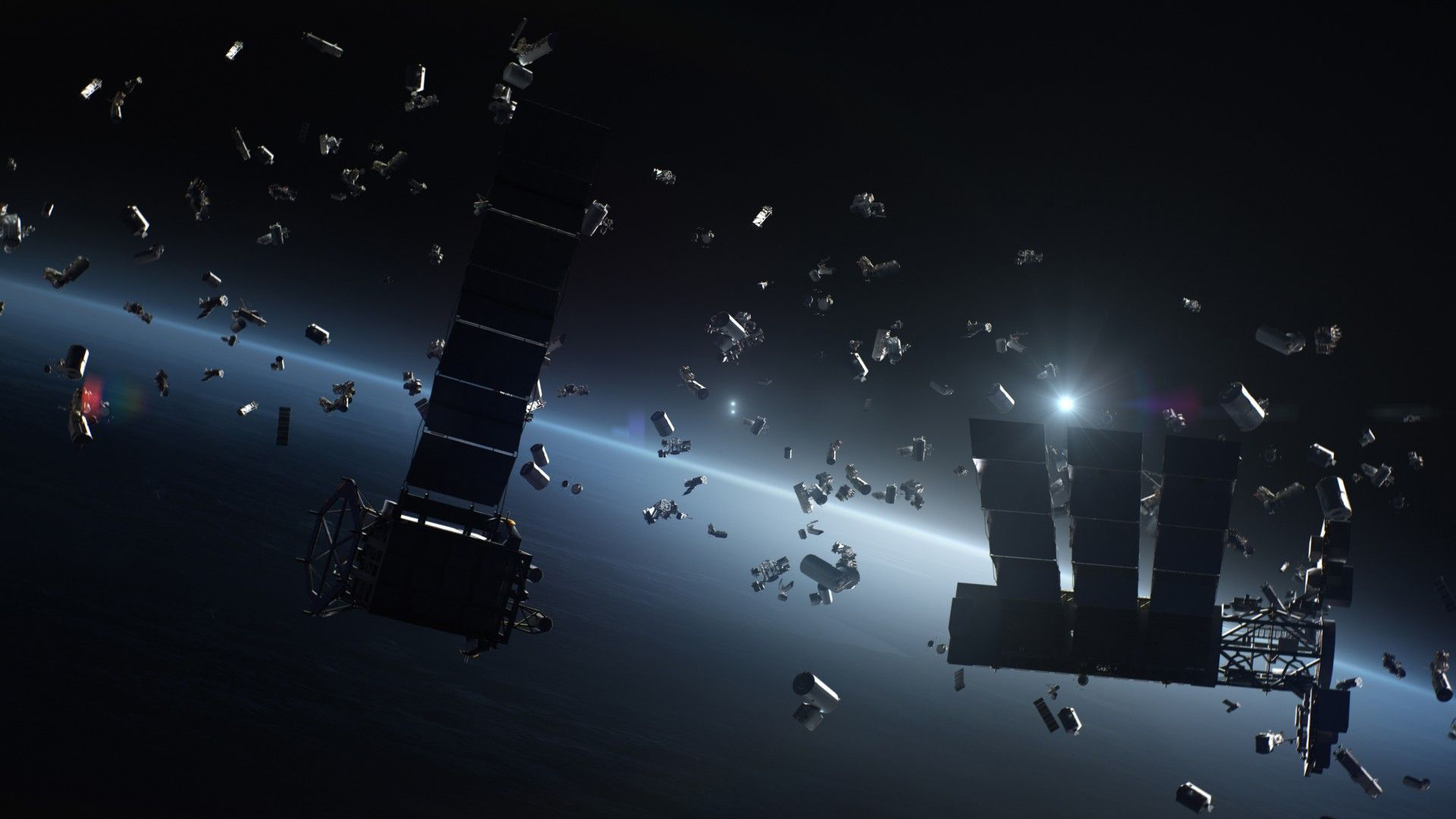
Thousands of satellites now occupy low Earth orbit (LEO). Insurance markets need to adapt to this changing orbital environment
Around 15,000 active space objects are currently being tracked in Earth orbit. LEO is moving from a place accessible only to countries with superpower budgets to a regular workplace, vital for the acquisition and transmission of data. That operating environment, whilst hazardous, is governed by a handful of Apollo-era international treaties that still shape national space law. The first six decades of human activity in space saw relatively few human-made objects in orbit, and the prospect of satellite collision barely registered as an operational concern. That has now changed. SpaceX reported to the Federal Communications Commission that its Starlink constellation performed roughly 300,000 collision-avoidance manoeuvres in 2025 alone, equating to approximately 820 per day, for a single operator. It is, however, the sheer increase in satellite numbers that is truly shifting the governance paradigm. Starlink is currently authorised to deploy up to 42,000 satellites, and Amazon’s Kuiper (now Leo) constellation, OneWeb, and a growing number of state-backed programmes are filling the same orbital bands with filings for tens of thousands of space objects.
Low Earth orbit is no longer empty space through which satellites can glide unimpeded. It is a busy operating environment that functions only because its largest occupant, SpaceX, is managing it, continuously and automatically, at an extraordinary scale. That is a concerning foundation on which to build the governance of a global data economy. Equally concerning is that this is the foundation on which the space insurance market is currently asked to provide cover.
The insurance gap
Space insurance broadly covers three phases: pre-launch and launch (historically the highest-severity risk, though improving as launch vehicles mature), in-orbit performance, and third-party liability. The commercial space insurance market has not kept pace with the transformation of LEO. It is in LEO, and particularly in the in-orbit segment, that the absence of an active insurance market is most acute. Industry data suggests that of roughly 6,000-plus LEO satellites operating in the mid-2020s, fewer than 100 carried active in-orbit insurance, a penetration rate of under 2%. Geostationary orbit tells a different story: individual GEO satellites represent capital investments of hundreds of millions of dollars with long operational lifespans, and the insurance market has evolved to serve them reasonably well. The global underwriting capacity for space insurance, across all segments, sits at around $550–700m annually, and by mid-2025, market sources described the sector as “fragile but stable, and desperately hungry for income”.
The reasons for the LEO gap are structural as opposed to indifference or indolence. Traditional actuarial modelling depends on independent loss events and meaningful historical data. Unfortunately, LEO provides neither. Loss history is thin and concentrated in a period of rapid technological change, making past data a poor guide to present risk. More fundamentally, losses in orbit are not independent: a single collision generates debris that raises the collision probability for every other object in the same orbital band. The Kessler syndrome, a cascade scenario in which each collision generates debris that triggers further collisions, is no longer a theoretical concern. The space insurance market cannot easily price a scenario in which a single event simultaneously affects thousands of assets across the same orbital shell. The result is that the market concentrates on what it can price, namely launch risk and loss of services; this leaves the in-orbit risk to operators to absorb or self-insure their assets.
The legal framework and its UK dimension
The governance framework underpinning all of this comes from the international space treaties of the United Nations. Under Article VI of the 1967 Outer Space Treaty, states bear responsibility for the activities of their national space actors, including non-governmental entities, and must authorise and continuously supervise their activities. Article VII addresses liability directly: countries that launch objects into space bear ultimate responsibility for damage caused by those objects, whether the objects are launched from their territory, the launch is procured by them, or their territory or facilities are used for launch.
The 1972 Convention on International Liability for Damage Caused by Space Objects builds on this, creating a bifurcated liability framework whereby launching states have absolute liability for damage caused by their space objects on the Earth’s surface or to aircraft in flight, and a fault-based regime applies to damage caused by their objects in orbit. States have managed this exposure by flowing liability down to commercial operators through national licensing regimes. Operators are required to indemnify the government against claims under the Convention, and most major spacefaring jurisdictions require operators to hold minimum third-party liability insurance as a licence condition.
The United Kingdom’s experience of translating this into domestic law provides an instructive case, not because it has got things wrong, but because the legislative journey reveals how difficult it is to get things right even with the best intentions. The 1986 Outer Space Act imposed an initially unlimited indemnity obligation on licensed operators. The commercial sector correctly identified this as a barrier to investment. The 2015 Deregulation Act addressed this by introducing a cap, set at €60 m for standard missions.
The 2018 Space Industry Act was intended to create a comprehensive modern framework for UK launch and orbital activities, but it introduced its own ambiguity. Section 12(2) provided that an operator licence ‘may’ specify a limit on liability under section 36, rather than ‘must.’ This distinction, though apparently technical, had real commercial consequences: operators could not be certain their exposure was bounded. During the parliamentary debates on the Space Industry (Indemnities) Bill in 2024, it was made explicit that it was not merely difficult, but impossible, to insure an unlimited liability, because insurers cannot hold unlimited capital as a matter of regulatory requirement. The Bill addressed this directly by amending ‘may’ to ‘must’ and providing the legislative certainty the industry had been seeking. The current position, a €60m cap for standard orbital missions and a Modelled Insurance Requirement approach calibrated to the specific risk profile of each launch, represents a significant development. Nonetheless, fixing domestic legislation is the more tractable part of the problem.

The mega-constellation challenge
The 1972 Liability Convention does not define what fault in orbital operations looks like, and in one sense, this is deliberate. By leaving fault as a question of fact rather than fixing it in treaty language, the concept remains capable of evolving alongside operational practice and technological development. The risk of anchoring a legal standard to the technology of 1972 was one the drafters wisely avoided.
The scale of change in LEO is, however, testing that flexibility to its limits. The Convention was drafted at a time when states operated broadly on a one-launch, one-object basis. In the current orbital environment, a collision could occur between two satellites operating under different national licences, managed by automated avoidance systems, where no human decision precedes the proximity event. The fault-based regime for in-orbit damage assumes that fault can be ascribed to a human decision-maker. Earth’s orbit is now populated by AI-managed constellations performing hundreds of thousands of manoeuvres without human intervention. Whether fault on the part of a human operator can be established in such circumstances is, at best, uncertain.
Compounding this, as the orbital population grows, reliable space surveillance and tracking (SST) data and space situational awareness (SSA) become both more important and more contested. Autonomous collision avoidance systems depend on accurate, current data about the orbital environment. Should fault be alleged following a collision, the evidential burden will fall substantially on SST and SSA data, and serious questions about the sufficiency, accuracy, and provenance of that data remain unresolved.
The regulatory asymmetry is also troubling. Well-resourced operators like SpaceX invest heavily in avoidance capability and SSA data, while smaller commercial operators share the same orbital bands with far fewer resources. Some underwriters have begun offering deductible waivers to operators who contribute high-fidelity tracking data to shared surveillance databases. This is a welcome development, but voluntary market incentives are a limited substitute for mandatory standards.
What should change
The problems with the space insurance market are a symptom of an increasingly congested LEO environment. The existing governance and related insurance framework were designed for a far less populous domain. There are, however, three things that need to change in order to inject life into LEO insurance.
First, the 1972 Liability Convention needs an established mechanism for addressing multi-party, autonomous-avoidance scenarios in orbit. The details of such a mechanism will need careful development. This is not a quick fix, but it is vital work if the Convention is to remain relevant to modern space operations. A working group under COPUOS would perhaps be the right place to start these discussions, ensuring both the legitimacy and inclusivity of any proposed approach. The UK is well-placed to advocate for this, as a mid-sized space power with genuine regulatory credibility following its domestic reforms, and home to Lloyd’s of London, which remains the global centre of gravity for space insurance underwriting.
Second, mandatory data-sharing should become a licence condition rather than a market incentive. If operators are to benefit from the bounded liability regime that domestic frameworks provide, contributing to the shared situational awareness infrastructure that makes that regime workable is a reasonable requirement. Mandatory contribution would, for the first time, give insurers and regulators an evidence base from which actuarial risk assessment, whilst never simple, at least becomes possible.

Third, regulators and the insurance industry need to engage seriously with pooled and parametric mechanisms as the only actuarially viable approach for dealing with the scale of objects posed by new constellations. Parametric policies pay out automatically when a defined trigger event occurs (for example, a confirmed signal acquisition failure, an orbital deviation beyond a specified threshold, or a kinetic impact confirmed by onboard sensors) without requiring damage assessment. This matters for LEO specifically because the claims administration overhead of conventional insurance would, for low-value smallsat assets, routinely exceed the value of the claim itself. Parametric approaches resolve this and have begun to emerge for smallsat operators.
The harder question is constellation-level coverage, where the obstacle is correlated catastrophic risk: a Kessler-type cascade would simultaneously affect every insured asset in the same orbital shell, breaking the independence assumption on which conventional reinsurance depends. Private capital alone cannot price this. The precedent for state involvement in correlated, uninsurable risk is well established; nuclear liability pools and flood reinsurance schemes are the obvious analogies, and a state-backed reinsurance facility for constellation-scale coverage deserves serious engagement in policy circles rather than remaining a theoretical possibility.
Conclusion
The recent growth in the orbital population has seen commercial ambition outpace both the legal frameworks designed to govern it and the insurance market asked to underwrite it. The uncertain contours of liability, in an era of autonomous operations, combined with insufficient actuarial data, have left LEO chronically underinsured at precisely the moment when the stakes are highest.
The UK’s experience with third-party liability demonstrates that careful, well-intentioned domestic reform is both possible and genuinely valuable, but that even the best national framework addresses only the most manageable layer of a much deeper problem. The Liability Convention’s state-centric, fault-based architecture was not designed for an operating environment measured in hundreds of thousands of autonomous avoidance events per year, and it is showing the strain. The three steps outlined above, mandatory data sharing, a COPUOS working group to develop mechanisms fit for autonomous multi-party operations, and serious engagement with parametric and pooled insurance models, will not resolve that strain overnight. They would, however, establish the foundations without which a functioning LEO insurance market cannot be built.
15,000 operational objects are currently tracked in Earth orbit. Tens of thousands more are planned. The gap between the scale of commercial ambition in LEO and the legal and financial infrastructure available to support it is not closing. At some point, that gap stops being a governance problem and starts being an economic inhibitor.
Written by Professor Christopher Newman and Alan Thompson.
Please Note: This is a Commercial Profile
This article will feature in our upcoming Space Debris Special Focus Publication.
Source link

