Advancing multicore fiber technologies for future applications
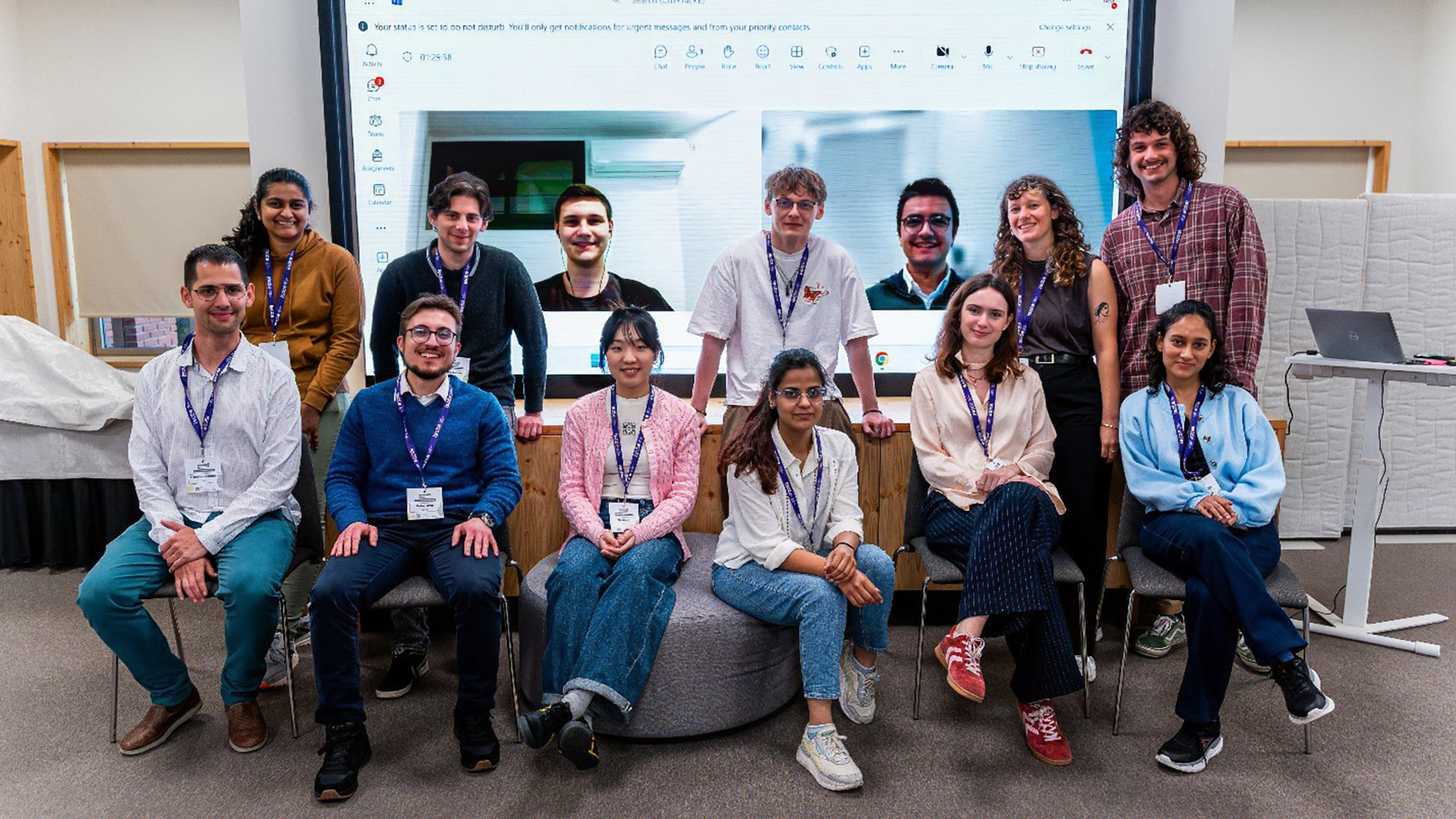
The MATCH project is a European doctoral training network advancing multicore fiber technologies through collaboration between 14 academic and industrial partners.
As artificial intelligence, cloud computing, video streaming, 5G networks, and the Internet of Things continue to accelerate digital transformation, global data traffic is growing at an unprecedented rate. To support this growth, future communication infrastructures must provide significantly greater transmission capacity while reducing energy consumption and optimising network resources.
One of the most promising solutions is multicore fiber (MCF) technology. By integrating multiple optical cores within a single fiber, MCFs enable parallel transmission channels that can dramatically increase communication capacity while maintaining compatibility with existing optical network infrastructures. In addition to telecommunications, MCFs are opening new possibilities in distributed sensing applications, including environmental monitoring, fire detection, seismic activity monitoring, and structural health assessment.
Technology for the next generation of networks
Conventional single-mode fibers have enabled decades of growth in global communications. However, with traffic volumes continuing to increase, entirely new approaches are needed to scale network capacity in a sustainable manner.
Space-Division Multiplexing (SDM) has emerged as one of the leading technological solutions for overcoming these limitations. Among SDM approaches, multicore fibers have demonstrated exceptional potential to increase transmission capacity by more than an order of magnitude while simultaneously reducing energy consumption and improving infrastructure efficiency.
The benefits are particularly significant for data centres, access networks, long-haul terrestrial systems, and submarine communications, where demands for bandwidth continue to grow rapidly. Beyond telecommunications, MCFs also offer unique opportunities for integrating communication and sensing functionalities within a single infrastructure, creating entirely new application domains.
These opportunities form the foundation of MATCH (Multicore fiber Applications and TeCHnologies), a Marie Skłodowska-Curie Actions Doctoral Network funded by the European Commission under Horizon Europe. Coordinated by Professor Adolfo Cartaxo at Iscte – Instituto Universitário de Lisboa, the network brings together world-leading academic and industrial expertise to advance multicore fiber technologies while training the next generation of researchers and innovators in multicore fiber technology.
A unique European doctoral training network
MATCH is far more than a research project. It is a comprehensive doctoral training network designed to equip 13 doctoral candidates (DCs) with the scientific expertise, technical skills, and international experience necessary to become future leaders in optical communications and photonics.
MATCH brings together a multidisciplinary and intersectoral consortium of 14 partners, including ten academic institutions and four industrial organisations. Spanning the entire innovation chain; from fundamental research and fiber manufacturing to optical systems, network engineering, sensing technologies, and product development, the consortium delivers a world-class advanced training programme to 13 DCs. The network combines expertise in fiber design, photonic components, optical systems, machine learning, network engineering, and sensing technologies.
Academic partners:
• Iscte – Instituto Universitário de Lisboa, Portugal
• Université de Limoges, France
• Universitat Politècnica de València, Spain
• Instituto de Telecomunicações, Portugal
• University of Stuttgart, Germany
• CNRS-PhLAM, France
• Hebrew University of Jerusalem, Israel
• Danmarks Tekniske Universitet, Denmark
• University of L’Aquila, Italy
• Université de Lille, France
Industrial partners:
• Heraeus Covantics, Germany
• Nokia / Infinera Portugal, Portugal
• Draka/Prysmian, France
• FBGS International, Belgium
Together, these organisations provide access to world-class laboratories, manufacturing facilities, experimental testbeds, and industrial development environments.

Strong industry engagement
A distinguishing feature of MATCH is the strong participation of industry.
The consortium includes Heraeus Covantics and Draka Prysmian, two leading multicore fiber manufacturers, FBGS International, a major developer of fiber-based sensing technologies, and Nokia / Infinera Portugal, a leading provider of optical networking solutions.
Through secondments, collaborative research activities, technical workshops, and participation in the Industrial Advisory Board, these partners help ensure that research remains aligned with emerging industrial needs and future market requirements. This close interaction significantly enhances the employability and leadership potential of doctoral candidates while helping ensure that the technologies and techniques developed within MATCH contribute directly to strengthening European industrial competitiveness in optical communications and photonics.
Advancing the state of the art in multicore fiber technology
The MATCH research programme is structured around three closely connected scientific pillars.
The first pillar focuses on the design and manufacture of next-generation multicore fibers capable of exceeding current state-of-the-art transmission capacities. Researchers are developing innovative core layouts and refractive index profiles to maximise capacity while maintaining practical compatibility with existing communication systems.
The second pillar addresses the development of advanced MCF-based components and subsystems. Research topics include optical amplifiers, fan-in/fan-out devices, optical splitters, wavelength-selective switches, multiple frequency comb generators, sensing technologies, and parallel-scalable signal processing architectures. Such developments are essential for transforming MCF technology from a laboratory innovation into a deployable communications platform.
The third pillar concentrates on systems, networks, and applications. Emphasis is placed on machine learning techniques capable of optimising network performance end-to-end, mitigating inter-core crosstalk, and enabling intelligent management of future high-capacity optical networks. Researchers are also investigating the coexistence of telecommunications and sensing signals within the same multicore fiber infrastructure.
These activities are supported by extensive experimental validation in leading laboratories and specialised testbeds across the consortium.
Building the doctoral cohort
A key objective of MATCH is to create a new generation of highly skilled researchers capable of addressing Europe’s future communication challenges. To achieve this, the project successfully recruited all 13 Doctoral Candidates through a highly competitive international process. Between February and December 2025, eight recruitment calls were organised, attracting candidates from diverse scientific and geographical backgrounds. The recruitment campaign concluded successfully in December 2025, completing the full doctoral cohort and marking a major milestone for the network.
Thirteen doctoral projects driving innovation
At the core of MATCH are 13 individual doctoral research projects spanning the full multicore fiber value chain: from fiber design and fabrication, through components and subsystems, to systems, networks, and applications. Individual topics range from advanced fiber design, high-capacity bidirectional transmission, and multicore fiber sensing to innovative optical amplifiers, frequency comb generation, scalable signal processing architectures, passive optical networks, machine learning-based communication systems, application-aware network design, and wavelength-selective switching technologies.
Collectively, the projects form an integrated research programme: advances in fiber design feed component development, while innovations in components and subsystems support next-generation transmission systems and intelligent network architectures. Several deliberately cut across more than one scientific pillar, encouraging close interaction between researchers and giving doctoral candidates experience across multiple disciplines. This fosters the kind of cross-disciplinary thinking the field demands while contributing to solutions with clear scientific, technological, and industrial relevance. The titles of the 13 individual doctoral research projects are as follows:
DC1: Impact of extra-light scattering on coupling in MCF
DC2: MCFs for high core-count bidirectional transmission in short-reach links
DC3: Combining RC-MCF transmission and fiber sensing
DC4: Innovative MCF amplifier approaches for telecommunications
DC5: Innovative FIFO for MCF amplifier: applications to telecommunications and sensors
DC6: Few-Mode Multi-Core fiber for SDM
DC7: Multiple frequency comb in multicore fibers
DC8: Multicore fiber coupling for parallel-scalable signal processing architectures
DC9: Multicore fiber technologies for Distributed Optical Fiber Sensors
DC10: Design of wavelength space-division multiplexing MCF-based passive optical networks
DC11: End-to-end learning for fiber-optic communication systems employing MCFs
DC12: Design of application-aware high-capacity optical networks
DC13: Wavelength-selective switches efficiently integrated with MCFs for optical networking scenarios
Training a globally minded cohort
MATCH’s training objectives are as ambitious as its research goals. The programme aims to:
Provide DCs with exceptional multidisciplinary knowledge and technology-specific skills in MCF, positioning them to lead the development of next-generation components, subsystems and networks.
Equip them with the latest advances in machine learning and their application to MCF transmission systems and networks.
Develop the characteristics of globally minded and creative researchers, including communication, management, leadership, interpersonal and risk-management competencies, through multinational and cross-sector collaboration.
Provide hands-on practical skills for laboratory and field experiments.
Strongly enhance employability prospects in both academia and industry.
The methodology emphasises cross-disciplinary methods and practical experience: every DC will have access to top laboratories and testbed facilities across host and secondment institutions, in both academic and industrial settings. Progress is tracked through technical workshops, regular management meetings, and technical deliverables.
Research in action
The network has already begun translating its scientific ambitions into concrete activities, advanced training, and collaborative research initiatives.
An important milestone was achieved with the Mid-Term Check Meeting and First MATCH Workshop, held at Iscte in Lisbon on 23-24 March 2026. The event brought together doctoral candidates, supervisors, and industrial partners to review progress, discuss emerging research directions, and strengthen collaborations across the project.
Immediately following the workshop, MATCH organised the Symposium on Multicore Fibers and Intercore Crosstalk on 24-25 March 2026. Hosted at Iscte, the symposium provided an important platform for researchers and experts to discuss recent advances in one of the most critical challenges affecting multicore fiber transmission systems. By facilitating dialogue between specialists working on fiber design, devices, systems, and network architectures, the event reinforced MATCH’s role as a focal point for the growing European multicore fiber community.
Training remains central to the project’s mission. Building on the momentum established during the first year of activities, the First MATCH Training School will take place at the University of Limoges from 1-5 September 2026. Bringing together doctoral candidates, supervisors, and invited experts, the school will provide intensive instruction covering not just theory and experiments of fiber fabrication, glass properties and fabrication, optical sensing, nonlinear fiber effects and telecommunication systems, but also transferable skills like scientific writing, valorisation and entrepreneurship.
Creating impact beyond research
Alongside its scientific programme, MATCH has developed a strong dissemination strategy to engage wider research, industrial, and innovation communities.
The project website serves as a hub for project information, publications, events, recruitment activities, and news. MATCH has also established an active presence on LinkedIn, Instagram, and YouTube, providing regular updates on achievements, training activities, and project events.
These communication channels support one of the network’s broader objectives: strengthening Europe’s leadership position in advanced optical communications while increasing awareness of the transformative potential of multicore fiber technologies.
Enabling Europe’s digital future
As demand for connectivity continues to grow, innovations in optical communications will become increasingly important for sustaining economic growth, digital transformation, and societal wellbeing. Through pioneering research, comprehensive doctoral training, and close industrial and international collaboration, MATCH is building both the technologies and the talent needed to support the next generation of communication networks.
The MATCH consortium has long been a leading force in advancing MCF technology and applying machine learning to optical communications on the European stage, with sustained leadership in national and European projects and top-level publications in the field. With its full cohort of 13 doctoral candidates now recruited and an active programme of workshops, symposia, and training events already underway, MATCH is channelling this expertise into a structured doctoral programme that does more than produce 13 PhDs: it builds a European talent pipeline equipped to deliver the optical networks that digitally transforming economies will rely on through the 2030s and beyond.
If multicore fiber lives up to its promise, thereby delivering significant capacity gains, lower power consumption, lower costs, and compatibility with existing infrastructure, all while doubling as a distributed sensing platform, it will reshape the backbone of the digital society. MATCH is making sure Europe has the people to make that happen.
Acknowledgment
This project has received funding from the European Union’s Horizon Europe Research and Innovation Programme under the Marie Skłodowska-Curie Grant Agreement No. 101169370.
Disclaimer
Views and opinions expressed in this article are those of the author(s) only and do not necessarily reflect those of the European Union. Neither the European Union nor the granting authority can be held responsible for them.
Please Note: This is a Commercial Profile
Please note, this article will also appear in the 27th edition of our quarterly publication.
Source link

