

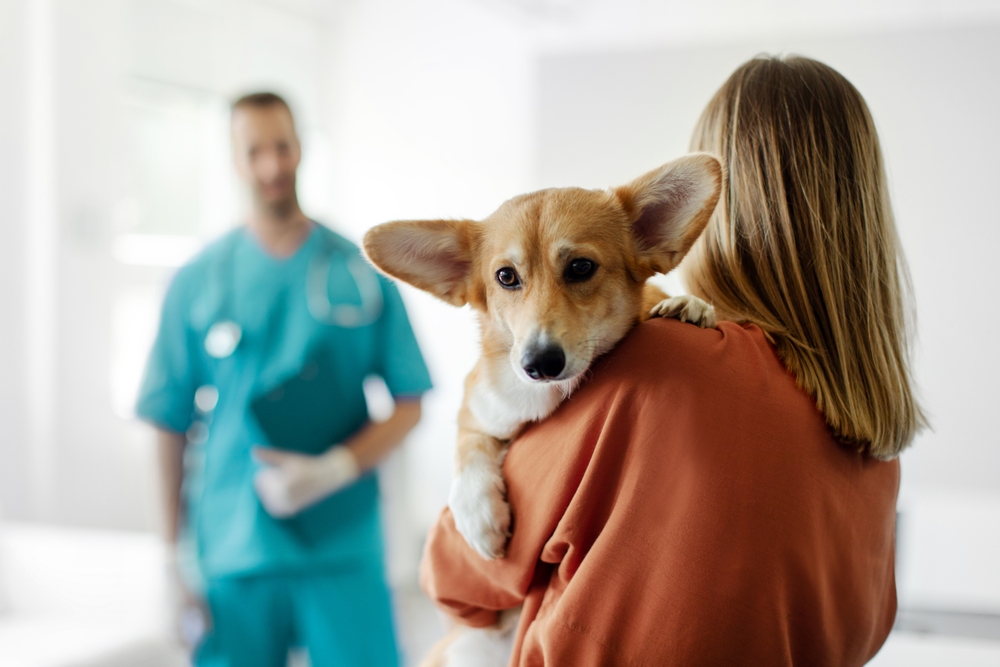
Dr Clare Knottenbelt, CEO of Kyrexa, discusses how the company is advancing canine cancer treatment with Rimcazole, an oral immunotherapy designed to improve outcomes and quality of life for dogs.
Cancer is one of the leading causes of death in dogs, with around one in three developing the disease during their lifetime. While advances in veterinary medicine have improved diagnosis and treatment, many existing therapies can place a significant physical, emotional and financial burden on both pets and their owners. As a result, there is growing interest in developing new approaches that not only target cancer more effectively but also prioritise quality of life throughout treatment.
Kyrexa is aiming to do just that with Rimcazole, an oral immunotherapy being developed as a novel canine cancer treatment. The company is also progressing a £1.5m funding round to support the next stage of clinical development.
In this interview, we explore the inspiration behind the company, the challenges facing veterinary oncology, how Rimcazole works, and the milestones the team hopes to achieve as development continues.
Kyrexa positions itself around the idea of making cancer care kinder. Before we get into the science, could you tell us a bit about the company, what inspired its creation, and why you decided to focus specifically on canine cancer?
Kyrexa was co-founded by myself and my colleague, Barbara Spruce. The company grew from Barbara’s extensive scientific knowledge of a particular molecule that she had previously studied for its effects on cancer cells using human cancer models and cell cultures.
Barbara approached me as a veterinary oncologist and asked whether I thought the molecule had potential in veterinary medicine. We were fortunate because the drug had already been tested in healthy dogs many years earlier during its original development for a completely different purpose in human mental health.
When I reviewed the data, I was immediately excited because the drug worked in a very different way from traditional chemotherapy. I felt there was a real need for change in cancer care, so we decided to explore what might be possible.
Very early in our work with dogs that had cancer, we noticed something unusual: an absence of significant side effects. Owners would tell us things like, “He’s got the light back behind his eyes.” That was an early indication that this treatment was doing something fundamentally different.
My background is in veterinary oncology, and I’ve worked in the field for many years. Early in my career at the university, I regularly saw patients who had travelled long distances to receive chemotherapy or specialist advice. Over time, I became convinced that we needed a better approach to canine cancer treatment.
That belief became much more personal when my own dog was diagnosed with cancer. Experiencing it from the owner’s perspective completely changed how I viewed treatment. I realised we needed to improve not only the therapies themselves, but also the experience for pets and their families.
Many owners were spending their dog’s final months travelling back and forth to hospital appointments, hoping to extend their pet’s life while managing side effects and the burden of treatment. I couldn’t help thinking there had to be a better way.
What are the biggest shortcomings of traditional therapies?
There are several challenges. One of the biggest is that most of the drugs we use were originally developed for humans. Because dogs and cats can’t tolerate the same level of side effects as people, we have to use lower doses. At the same time, those drugs still need to kill cancer cells, so we’re always trying to balance effectiveness with safety.
Even the drugs licensed specifically for dogs are based on concepts developed for human oncology. The reality is that most investment goes into human cancer research, and veterinary medicine benefits by adapting those discoveries rather than developing entirely new treatments.
Traditional cancer drugs work by killing rapidly dividing cells. The problem is they can’t distinguish perfectly between cancer cells and healthy cells that also divide quickly. That includes the lining of the intestines, bone marrow, where blood cells are produced, and hair follicles. As a result, healthy tissue is damaged alongside the cancer.
Because of this, patients require regular blood tests to monitor their white blood cell counts and other indicators before treatment can continue safely. That means repeated visits to the veterinary hospital, ongoing monitoring and frequent adjustments to treatment depending on the results.
For many owners, instead of simply enjoying the time they have left with their dog, those final months become dominated by appointments, travel and hospital visits. Some dogs also experience significant side effects that require hospitalisation, making an already difficult situation even harder.
From my own experience, the emotional burden is enormous. It’s like carrying a backpack that gradually gets heavier without you noticing. Owners desperately want to do the right thing for their pets, but treatment can become emotionally exhausting, financially demanding and incredibly time-consuming.
There’s another important issue too. Because chemotherapy drugs are toxic, they can also pose risks to people handling them. The drugs, and their breakdown products, can be present in urine, faeces, saliva and vomit.
That creates additional concerns for pregnant women, people who are breastfeeding, young children who interact closely with the dog, or anyone taking immunosuppressive medication following a transplant or for an autoimmune condition.
For some families, those risks influence whether treatment is even an option. I’ve had owners tell me they simply couldn’t take the risk because they had young children at home. It’s heartbreaking when people find themselves in that position.
It sounds like an incredibly complex and distressing experience for both owners and their pets. Moving on to Rimcazole, it’s been described as the first oral immunotherapy for canine cancer. For readers without a medical background, how does it work, and what makes its mechanism different from conventional therapies?
It’s a fascinating drug because it works in several different ways.
Normally, healthy cells reach the end of their lifespan and naturally destroy themselves. This process helps keep our bodies healthy by removing old or damaged cells. Cancer cells, however, lose that ability. Instead of dying when they should, they continue dividing and producing more cancer cells.
Under normal circumstances, the immune system would also recognise and destroy abnormal cells before they become a problem. In fact, that happens constantly throughout our lives. The issue is that cancer cells develop ways of avoiding detection.
I often compare it to a Harry Potter invisibility cloak. The cancer effectively hides from the immune system, allowing it to continue growing unnoticed.
Rimcazole helps remove that cloak. It restores the signals that tell damaged cells they should die while allowing the immune system to recognise the cancer again and attack it naturally.
That’s one of its key mechanisms, but it does more than that.
The drug also reduces the growth of blood vessels feeding the tumour. Since cancers rely on a blood supply to continue growing, restricting that supply helps slow tumour progression.
Another interesting feature is that the drug concentrates inside cancer cells over time. Rather than requiring increasingly aggressive doses, relatively small amounts accumulate where they’re needed most, which is very different from traditional chemotherapy.
So you’ve effectively got three important actions happening simultaneously. The drug accumulates inside the cancer cell, restores the cell’s natural self-destruct process and helps the immune system recognise the tumour again.
One of the most exciting aspects is that Rimcazole also affects dopamine. It works as a dopamine reuptake inhibitor, meaning dopamine stays in circulation for longer. Since dopamine is associated with wellbeing, many patients appear to feel brighter and happier while taking the treatment.
That’s a real double benefit. Not only are you targeting the tumour while largely sparing healthy cells, but you’re also helping improve the dog’s quality of life during treatment.
Early clinical data appears very encouraging. Which findings have given you the greatest confidence that Rimcazole has the potential to become a new standard of care in canine cancer treatment?
The key thing for me is that we’ve been treating very advanced cases. That’s always how new drugs are introduced. You can’t start by treating early-stage patients, so we work with dogs that have exhausted other options or for which no other treatments are available.
What we’ve seen is stabilisation of cancer growth, even in dogs with extremely advanced disease. Some of these tumours have been the size of footballs, yet we’ve still seen the cancer stabilise in certain patients.
We’ve also seen lung metastases disappear completely in some cases. I’ve never seen that happen before in these types of cancers, so that’s incredibly exciting.
For me, though, the biggest difference isn’t just what we’re seeing on x-rays or other tests. It’s how the dogs feel while they’re taking the drug.
We’ve observed very few side effects. The small number that did occur were either mild enough that no changes to treatment were needed or completely reversible. Overall, the treatment has been extremely well tolerated.
Most importantly, owners consistently tell us their dogs are playing like puppies again. They’re happier and enjoying life.
One case really stands out. A rescue dog came off the drug because its tumour had progressed, but the owner asked if it could go back on treatment because they felt their dog had been much happier while taking it.
Ultimately, that’s what we all want for our pets. We want as much quality time with them as possible. Cancer will inevitably shorten many lives, but if we have a treatment that can slow tumour growth while helping dogs feel happier and maintain a good quality of life, that’s incredibly important.
As you say, quality of life is just as important as survival time for owners. The fact that Rimcazole can be administered at home as an oral treatment also seems significant. How could that change the experience for owners and their dogs?
I think it has the potential to be transformative.
When my own dog developed cancer, I made a different decision from the one many of my clients make. I chose not to pursue repeated hospital treatments because I knew how much he disliked going to the veterinary hospital.
He found it stressful. He didn’t like the slippery floors, the unfamiliar smells or being taken away for procedures. During the time he had cancer, I wanted him to spend as much of his remaining life at home, living as normally as possible.
I didn’t want him repeatedly having blood samples taken, catheters inserted or spending time in hospital. That’s not to say those treatments are wrong. Many owners choose them, and many dogs tolerate them very well. It simply wasn’t the right decision for my dog.
I think it’s similar to the human experience. When someone is diagnosed with cancer, life quickly becomes centred around hospital appointments and treatment schedules. There’s a constant reminder of the illness.
My hope is that we can reduce that burden for dogs and their owners. Instead of regularly travelling to the hospital, owners could give their dog a capsule at home and then get on with enjoying everyday life together.
The treatment becomes part of a normal routine rather than something that dominates every day. I think that’s a really important shift in how we think about canine cancer treatment.
Moving on to your announcement, you’ve recently launched a £1.5m funding round. Could you tell us where that currently stands?
We launched the funding round around a month ago with a target of raising £1.5m. So far we’ve secured around £500,000, and we’re continuing to speak with investors as we work towards raising the full amount.
We’re really pleased with the progress we’ve made so far.
We’ve had some really encouraging discussions with veterinary oncologists and people from major pharmaceutical companies. There’s genuine excitement about the product, but naturally, they want to see us take it a little further before they come in at the next stage.
That’s fairly typical. Larger pharmaceutical companies often want innovative businesses to prove the concept before making a significant investment.
The immediate priority for this funding is to improve the formulation of the drug.
Up until now, we’ve essentially been producing capsules by hand at a relatively small scale. The treatment has worked well, but we believe we can improve the formulation further to make it even better for patients.
The funding will also allow us to expand our clinical work by studying the drug in a wider range of disease stages within specific cancer types.
Initially, we’re focusing on melanoma, which represents a significant unmet clinical need, as well as squamous cell carcinoma.
These are the cancers where we’ve seen some of the most promising results so far, and they also offer the best opportunity to demonstrate the treatment’s benefits.
Every cancer behaves differently, with different survival expectations and responses to therapy. We’ve deliberately chosen two particularly challenging tumour types because they’re both common and represent major clinical problems for our patients.
It sounds like an exciting time for the company. If we were having this conversation a year from now, what would success look like? Are there any other major milestones you’re hoping to achieve over the next 12 months?
One of our priorities is to begin to understand the market better, particularly in the US. Developing a new drug follows a fairly well-established pathway, and our goal is to secure conditional approval in the US market first.
I appreciate that some people may be disappointed that the treatment isn’t likely to reach the UK or Europe first, but the US regulatory system offers incentives that make this the most practical route. Conditional approval would allow us to begin marketing the product for a specific indication while continuing to gather the evidence needed for full approval.
That creates an important opportunity. It enables us to generate revenue that can be reinvested into the next stages of development while continuing to strengthen the evidence base.
Over the coming year, one of our key objectives is to better understand the US market and identify where the treatment can have the greatest commercial impact. That information will help shape the next phase of development and support our plans for wider approval.
At the same time, we’ll continue working towards full regulatory approval in both the US and, ultimately, Europe and the UK.
Our immediate priorities are to finalise the formulation, generate more data in our selected tumour types and confirm which indication will become our primary focus. Alongside that, we’ll carry out further market analysis to ensure we’re targeting the right opportunity and creating a sustainable pathway for future development.
We’ll also be preparing for our next fundraising round. Towards the end of 2027, we’ll be looking to raise a further £6m, which we expect will take us through to conditional approval.
That second funding round will support larger clinical studies in our chosen tumour type, as well as the additional work required as part of the regulatory approval process.
There are a number of regulatory requirements that every company developing a new medicine must complete. We’re confident about those stages because many of the key risks have already been addressed through the work we’ve done so far.
This first funding round is focused on delivering the evidence that pharmaceutical companies want to see before taking the next step. Once we’ve achieved those milestones, we’ll be well positioned to move into the next phase of development with greater confidence.
Source link
