iFAST Diagnostics delivers faster antimicrobial susceptibility testing
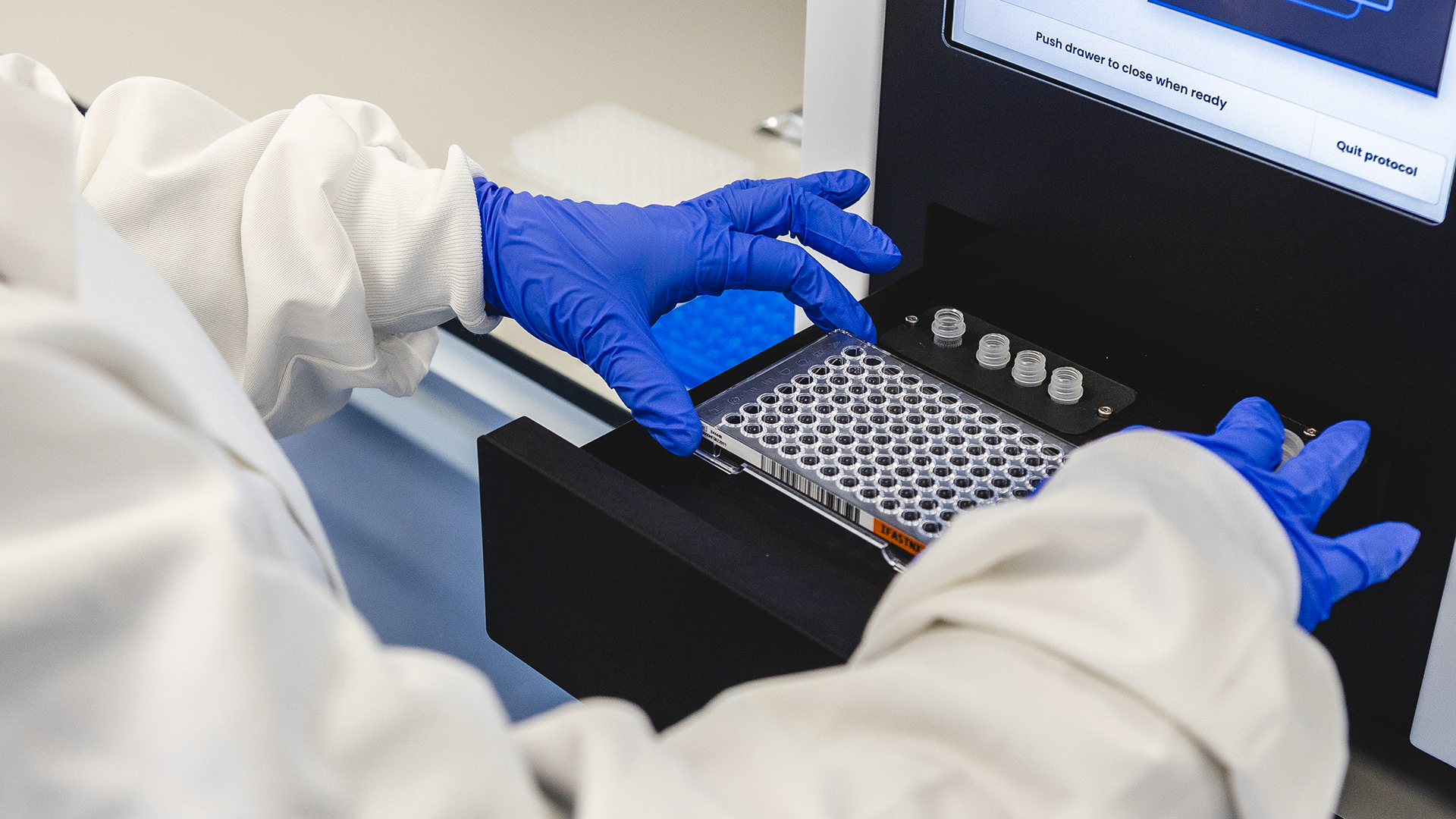
iFAST Diagnostics Ltd has developed a breakthrough technology that delivers antimicrobial susceptibility testing (AST) results with speed, accuracy, and actionable clinical detail.
Antimicrobial resistance (AMR) has emerged as one of the defining health challenges of our time. As bacteria evolve and become increasingly resistant to existing treatments, the global community faces a mounting crisis that threatens to undermine decades of medical progress. Central to this challenge is the need for rapid, accurate identification of the most effective antibiotic for each patient.
iFAST Diagnostics Ltd, a spinout from the University of Southampton, is pioneering a breakthrough technology that has the potential to transform clinical practice, improve patient outcomes, and significantly slow the spread of AMR.
This article explores the scale of the AMR problem, the limitations of current diagnostic methods, and the innovative approach developed by iFAST Diagnostics to deliver rapid, precise, antimicrobial susceptibility testing. By enabling clinicians to prescribe the right antibiotic within hours rather than days, this technology represents a major step forward in the global effort to optimise antibiotic therapy.
The growing threat of antimicrobial resistance
Antimicrobial resistance poses a significant and complex challenge that impacts populations worldwide. It affects not only human and animal health but also agriculture and the environment.
AMR happens when pathogenic microorganisms (microbes), including bacteria and fungi, develop the ability to survive drugs meant to eliminate them.
This makes infections more difficult to treat, leads to longer-lasting illnesses, and raises the chances of serious disease and death.
Globally, the scale of the AMR problem is stark. A comprehensive analysis of the global impact of AMR published in The Lancet¹ estimated that bacterial AMR (antibiotic resistance) was responsible for 1.27 million deaths in 2019 and associated with 4.95 million deaths overall, with resistance itself causing more deaths than HIV/AIDS or malaria.
These figures demonstrate that antimicrobial resistance poses a substantial risk and threat to global health.
AMR severely affects low- and middle-income countries, but high-income countries also face high resistance rates.
The 2024 ECDC report defines antimicrobial resistance in the EU/EEA as a major public-health threat, with rising bloodstream infections caused by key resistant bacteria.²
AMR is responsible for approximately 1.3 million deaths globally each year, with more than 35,000 deaths every year in the EU/EEA, all as a direct consequence of infections due to antibiotic-resistant bacteria. This health impact is comparable to that of influenza, tuberculosis, and HIV/AIDS combined.
The misuse and overuse of antimicrobials (including antibiotics) in humans, animals, and plants are recognised as the main drivers in the development of drug-resistant pathogens. Worldwide, in many healthcare settings, antibiotics are still prescribed empirically, with decisions based on symptoms and clinical experience. This is because current diagnostic methods are too slow to enable prompt, targeted treatment.
This practice of first prescribing antibiotics based on patient symptoms (empirical therapy) increases the likelihood of using ineffective or unnecessarily broad-spectrum antibiotics, which then helps to accelerate the emergence and spread of resistance.
Why speed matters: The limitations of current AST methods
Antimicrobial susceptibility testing is the process used to determine which antibiotic will be most effective against a specific bacterial infection. In most hospitals, AST is still performed using classical culture-dependent microbiology methods. These approaches, while robust and well validated, typically require one to two days – or longer – to generate a full susceptibility profile from a positive blood culture.
For patients with serious infections, particularly sepsis, this delay can be critical. Clinicians must act quickly, often initiating broad-spectrum antibiotic therapy before AST results are available.
Although this method can quickly save lives, it also leads to major consequences:
Suboptimal therapy: The initial antibiotic may not be the most effective for the infecting organism, leading to treatment failure or delayed recovery.
Increased resistance: Overusing broad-spectrum antibiotics encourages resistant strains to survive and spread.
Higher healthcare burden: Prolonged illness, longer hospital stays, and more intensive care all contribute to increased healthcare costs and resource use.
Greater risk of severe outcomes: For conditions such as bloodstream infections and sepsis, each hour of delay in effective therapy is associated with worse outcomes and higher mortality.
These outcomes underscore the critical need for a rapid, precise, and cost-effective antimicrobial susceptibility testing solution that can be seamlessly incorporated into standard clinical workflows.
A breakthrough in rapid diagnostics: The iFAST rapid AST system
iFAST Diagnostics has developed a radically new rapid AST system that delivers results in three hours or less from a positive blood culture. This represents a significant step change compared with conventional methods that require 24-72 hours to provide definitive susceptibility data.
At the core of the process developed by iFAST Diagnostics is a miniaturised microfluidic impedance cytometer. This microfluidic device is capable of analysing the phenotypic response of thousands of individual bacteria to antibiotics by measuring their electrical properties.
Instead of waiting for bacteria to grow in the presence of antibiotics, the system detects rapid biophysical changes that occur when susceptible bacteria respond to antimicrobial exposure.
How the technology works
iFAST Diagnostics uses a microchip-based process to analyse the biophysical properties of bacteria before and after exposure to a panel of antibiotics. The iFAST workflow can be summarised as follows:
Sample preparation: Bacteria are extracted from a positive blood culture and processed (for example, using a dedicated kit) before being suspended in a suitable medium.
Antibiotic exposure: The bacterial suspension is exposed to a range of antibiotics at defined concentrations and incubated for approximately two hours.
High throughput measurement: After incubation, the iFAST reader passes thousands of individual bacteria through a microfluidic channel, at speed. The iFAST microfluidic impedance cytometer can analyse up to 10,000 cells in under a minute.
Phenotypic fingerprinting: Susceptible bacteria undergo measurable changes in their electrical characteristics (such as size, membrane properties, and internal composition) following antibiotic exposure, whereas resistant bacteria show little or no change.
Result generation: Using these measurements, the iFAST system can generate full qualitative S/I/R (Sensitive, Intermediate, or Resistant) results and quantitative MIC (Minimum Inhibitory Concentration) values for each antibiotic tested, after confirmation of an initial positive blood culture.
This phenotypic approach works across a wide range of bacterial species, regardless of Gram stain status, because it relies on fundamental biophysical responses rather than specific molecular markers.

Why electrical impedance matters
Impedance flow cytometry is a high-throughput technology. Individual cells are analysed by measuring their electrical impedance (opposition to electrical current) as they pass through a microfluidic channel. Changes in impedance at different frequencies can reveal key cellular properties, including:
Cell size and volume
Membrane capacitance – ability to store electrical charge
Internal structure and composition
When antibiotics successfully harm or destroy bacteria, they alter certain proteins, resulting in a unique electrical “fingerprint” that indicates susceptibility.
Susceptible bacteria undergo measurable changes in their electrical characteristics
This makes impedance flow cytometry a powerful tool for diagnostics, cell sorting, and life science research.
Miniaturisation
Conventional optical flow cytometers, which use lasers and fluorescence to analyse cells, are widely used in medicine and research but are typically large, complex, and expensive.
By contrast, iFAST has miniaturised the cytometer, presenting this in a tiny chip that measures the electrical properties of cells, enabling a compact, cost-effective instrument suitable for routine use in clinical microbiology laboratories.
Traditional optical flow cytometers are large and costly, but the process developed by iFAST Diagnostics reduces this technology to a small chip that measures cells electrically, making it affordable and practical for everyday use in clinical labs.
Clinical impact: Faster decisions, better outcomes
The speed and depth of information provided by iFAST Diagnostics Ltd translates into several important clinical and operational benefits.
Rapid, actionable results
By delivering qualitative (S/I/R) results in approximately three hours, the iFAST system allows clinicians to move from empirical to targeted therapy within a single working shift. This is particularly critical for life-threatening infections such as sepsis, where timely optimisation of antibiotic therapy can significantly improve survival.
High accuracy and reliability
iFAST Diagnostics has demonstrated at least 95% concordance with traditional disk diffusion methods. This high level of agreement with established methods provides confidence that rapid results can be used safely to guide clinical decision making.
Improved patient outcomes
Earlier, more precise antibiotic selection can:
Reduce mortality and morbidity associated with severe infections
Shorten hospital stays and reduce the need for intensive care
Lower the risk of complications and recurrent infections

By ensuring that patients receive the most appropriate antibiotic when they most need it, the iFAST Diagnostics system directly supports better clinical outcomes.
Reduced antimicrobial use and AMR mitigation
Because the iFAST Diagnostics system quickly identifies the optimal narrow-spectrum antibiotic, clinicians are less reliant on prolonged use of broad-spectrum agents. This helps reduce unnecessary antimicrobial exposure and supports global efforts to curb the development and spread of resistance. Rapid AST is therefore not only a tool for individual patient care but also a strategic asset in antimicrobial stewardship programmes.
Operational efficiency for laboratories
The iFAST Diagnostics has designed a system with modern laboratory workflows in mind:
High throughput: A single instrument can process more than 10 patient blood samples per shift.
Compact footprint: With a footprint of approximately 600 × 600 mm, the system fits easily into existing lab spaces.
Cost-effective operation: Per test costs are comparable to or lower than current workflows, with reduced labour requirements.
Environmental and logistical advantages: The system generates significantly less plastic waste than standard methods, and consumables can be stored at room temperature, freeing valuable refrigerated storage space.
These features make it easier for laboratories to adopt the iFAST rapid AST system without major infrastructure changes.
Validation, certification, and recognition
iFAST Diagnostics has successfully validated its technology through clinical trials. The iFAST One is UKCA certified for gram-negative positive blood cultures. The gram-positive panel will follow.
The company has achieved ISO 13485 certification for the design, manufacture, and distribution of antimicrobial susceptibility testing devices. Available now across Great Britain, iFAST is planning an EU rollout in 2026/27.
The iFAST Diagnostics innovation has already been recognised through several accolades, including the Institute of Physics Lee Lucas Award 2025. This award celebrates early-stage companies bringing innovative products into the medical and healthcare sector. iFAST Diagnostics is also part of the 2024 AMR Innovation Programme led by the Healthcare Innovation Consortium, highlighting its role in the broader ecosystem of AMR solutions.
A transformative step in the fight against AMR
The global challenge of antimicrobial resistance demands coordinated action across policy, public health, research, and clinical practice. Rapid, accurate AST is one of the most powerful tools available to clinicians, yet for decades it has been constrained by slow, labour-intensive methods.

By harnessing microfluidic impedance cytometry to deliver fast, precise phenotypic susceptibility data, iFAST Diagnostics offers a fundamentally new way to optimise antibiotic therapy. This technology gives results in 3 hours, enabling clinicians to give the best drug every time, improving patient outcomes; reducing unnecessary antimicrobial use, and contributing meaningfully to the global effort to contain AMR.
In a world where resistance threatens to outpace the development of new antibiotics, innovations that maximise the effectiveness of existing drugs are essential. iFAST Diagnostics stands as a compelling example of how physics, engineering, and clinical science can come together to address one of the most pressing health threats of our age.
References
“Global burden of bacterial antimicrobial resistance in 2019: a systematic analysis Murray, Christopher J L et al. The Lancet, Volume 399, Issue 10325, 629 – 655”
ECDC CORPORATE REPORT Consolidated Annual Activity Report 2024
Please Note: This is a Commercial Profile
Please note, this article will also appear in the 25th edition of our quarterly publication.
Source link

