Machine learning for next-generation nuclear reactor design
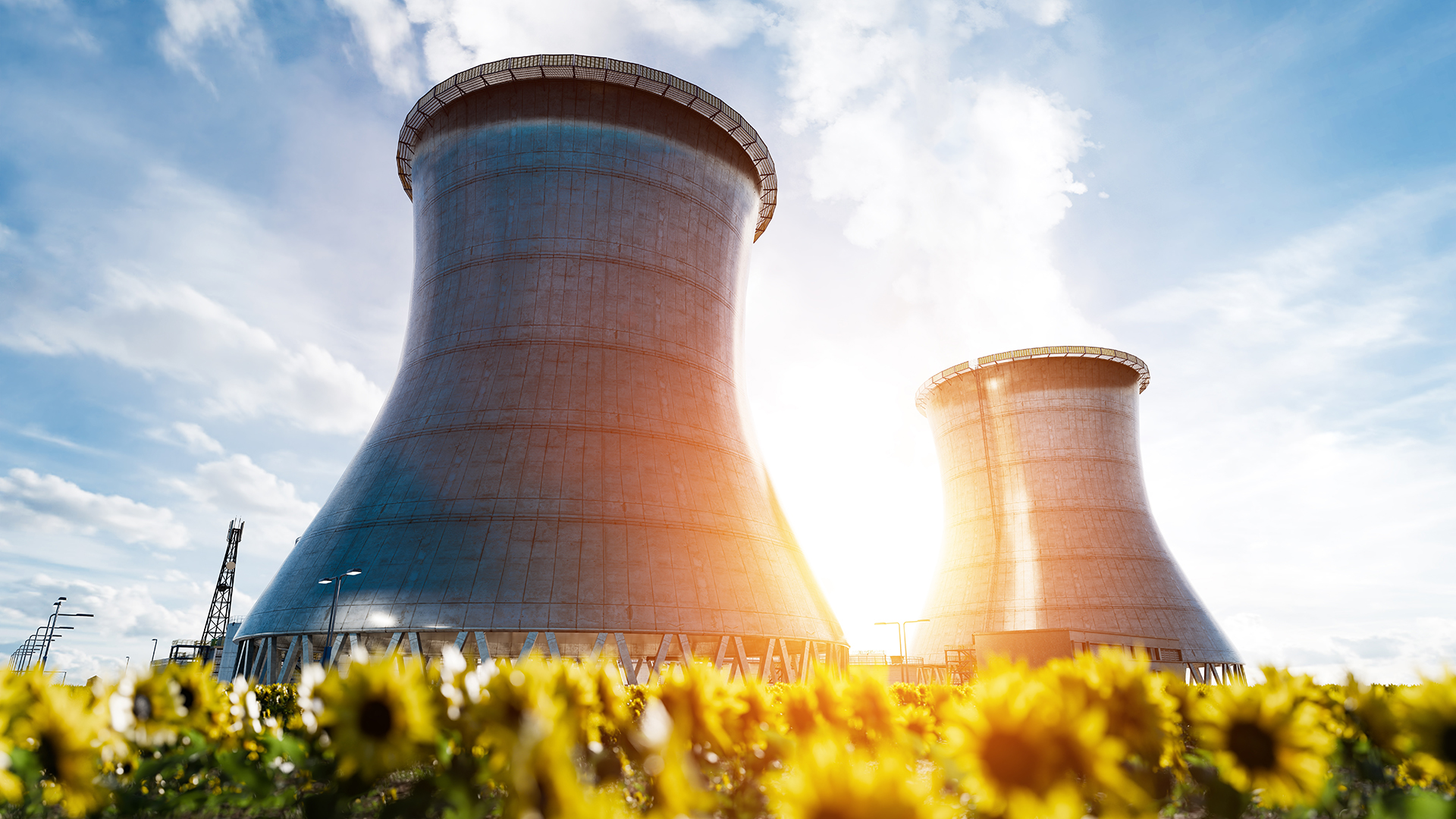
Machine learning accelerates safe and cost-effective nuclear reactor design by enabling fast, accurate surrogate models for complex optimisation problems
In nuclear engineering, reactor core design and public safety are intimately linked. Ensuring safety is the central objective of design activities and must be guaranteed across all possible reactor states: from nominal operation to anticipated operational occurrences – such as an unexpected control rod withdrawal – and up to design-basis accidents.
From a safety perspective, the objectives of reactor core design can be grouped into two broad categories.
First, the reactor core must be adequately cooled under all conditions. Unlike most energy systems, nuclear reactors continue to generate heat even after shutdown due to the decay of radioactive fission products. For instance, a 3000 MWth reactor still produces about 30 MW of decay heat one hour after shutdown. If this heat is not continuously removed, fuel temperatures can rise, potentially leading to core damage and, in extreme cases, meltdown. The accidents at Fukushima Daiichi and Three Mile Island vividly illustrate the consequences of insufficient decay heat removal.
Second, reactivity must be carefully controlled to prevent excursions both during operation and in shutdown conditions. During normal operation, the reactor is maintained in a critical state, and the design must ensure that external perturbations do not trigger unstable or unsafe behaviour. In shutdown conditions, on the other hand, sufficient margins to criticality must be guaranteed. The combined design of fuel characteristics and control and shutdown systems is therefore essential to mitigate reactivity-induced accidents.
The importance of reactor core design for safety is emphasised by the International Atomic Energy Agency (IAEA) in its Safety Standards Series. In particular, the International Nuclear Safety Advisory Group (INSAG), in INSAG-10,¹ identifies sound design as the first layer of defence in depth, forming the foundation for preventing and mitigating nuclear accidents.
Safety, however, is only one side of the problem. The primary purpose of a reactor core is energy production, and economic considerations are equally important: electricity must be generated at competitive costs. Reactor design thus becomes a classical optimisation problem, where the cost of electricity is minimised subject to a wide range of constraints. These include not only safety requirements but also licensing regulations, technological feasibility, and manufacturing limitations.
Computer simulations play a crucial role in addressing this challenge. Because full-scale reactor experiments are extremely expensive and rarely feasible, validated simulation tools are often the only practical way to explore the complex physical processes occurring inside a reactor core. These tools span a wide spectrum in terms of underlying assumptions and physical fidelity. High-fidelity simulations aim to capture detailed multi-physics interactions with minimal simplifications, offering high predictive accuracy but at a significant computational cost. This can become prohibitive in large-scale optimisation studies.
To overcome this limitation, fuel and core designers sometimes develop surrogate models to improve computational efficiency. These approximations replace complex simulations with simpler, computationally efficient representations – sometimes as straightforward as polynomial response surfaces.² While this approach sacrifices some physical detail, it enables rapid evaluations and makes large-scale design optimisation tractable.
In recent years, advances in artificial intelligence (AI), and particularly in machine learning, have opened new avenues for surrogate modelling of complex physical phenomena. Among the most prominent approaches are Artificial Neural Networks (ANNs), which have been successfully applied to a wide range of supervised learning tasks, including the prediction of molecular properties.³ In supervised machine learning, the goal is to learn a mapping – a relationship or function – between inputs and outputs with a data-driven approach. These tasks are typically divided into two categories: classification and regression. In classification problems, such as image recognition, the model is trained to assign discrete labels to inputs. In regression problems, by contrast, the objective is to predict continuous quantities and minimise the error with respect to experimental data or high-fidelity simulations.
Regression techniques, in particular, are well suited for surrogate modelling, as they can approximate complex input-output relationships while remaining computationally efficient.
In-core fuel management
In-core fuel management is one of the routine tasks of nuclear reactor core designers. Given a reactor core configuration, the objective is to determine an optimal fuel loading strategy that minimises fuel costs while ensuring that key safety parameters – such as reactivity coefficients and radial and axial power distributions – remain within prescribed safety margins.
Fuel management optimisation (FMO) problems belong to the class of combinatorial optimisation problems and share similarities with the well-known Travelling Salesman Problem (TSP).⁴ However, unlike the TSP, FMO presents additional challenges. Evaluating the performance of a given core loading is computationally expensive, and both the objective and constraint functions exhibit highly complex, non-linear behaviour. These characteristics make the direct application of gradient-based optimisation methods impractical.
At the early stages of the nuclear era, core design relied largely on heuristic rules and expert judgement rather than formal optimisation frameworks. It was only in the 1990s, with the emergence of metaheuristic algorithms such as Genetic Algorithms⁵ and Simulated Annealing,⁶ that more systematic optimisation approaches began to develop. In the early 2000s, commercial tools such as ROSA⁷ enabled automated fuel management optimisation. More recently, advances in machine learning have led to the integration of surrogate models within optimisation workflows, in approaches often referred to as surrogate-assisted optimisation.
FMO problems can be broadly divided into two main categories. In cycle-to-cycle optimisation, the goal is to determine the optimal loading pattern for the next operating cycle, given the current inventory of fuel assemblies inside the core and in storage. The objective is typically to maximise cycle length while minimising fuel costs. This problem is routinely encountered in operating power plants and, as a result, has received significant attention in both industry and academia.
Equilibrium cycle optimisation, on the other hand, seeks to identify a repeatable and optimised fuel management strategy, including both the loading pattern and the fuel assembly design. Although this problem is less commonly addressed – due to its higher complexity and the significant computational effort required to simulate equilibrium conditions – it remains highly relevant for long-term planning, cost projections, and fuel procurement strategies. In this problem, in particular, even when using dedicated high-performance computing resources, evaluating a single equilibrium cycle configuration with high-fidelity simulation tools can take several hours.
In our research, several gaps have been identified in the literature regarding the surrogate modelling of equilibrium cycles. Addressing these gaps could significantly reduce computational costs and enable more efficient optimisation workflows. The outcome of this research is a series of publications addressing economic aspects⁸ and the surrogate modelling⁹ of equilibrium cycles.
Fuel expenses in Small Modular Reactors
With growing concerns over climate change, many countries are reconsidering nuclear energy as part of their strategy to reduce carbon emissions. However, the high upfront costs associated with large-scale nuclear power plants have often slowed down or even halted new projects. Small Modular Reactors (SMRs) have been proposed as a way to address these challenges.
SMRs typically build upon mature technologies – such as Light Water Reactors (LWRs) – and adapt them into more flexible and compact designs with lower power output. By reducing reactor size and introducing concepts such as modularisation, standardisation, and passive safety systems, SMRs aim to lower initial capital costs and shorten construction times, potentially offsetting the loss of economies of scale.
However, the reduced size of SMRs also introduces new challenges. In particular, smaller cores tend to have a less efficient neutron economy, meaning that a larger fraction of neutrons can escape the system without contributing to the fission process. As a result, fuel cycle costs are expected to play a more significant role in the overall cost of electricity for SMRs. This makes FMO even more critical for their economic viability.
Within the framework of the Academic-industrial Nuclear Technology Initiative to Achieve a sustainable energy future (ANItA),10 this research focuses on a SMR design which has been developed starting from publicly available information on Westinghouse AP300TM reactor design. In particular, this design has been selected for its distinctive characteristics. In this concept, the reduction in electrical output is achieved primarily by lowering the core power density rather than by significantly shrinking the reactor dimensions.
From a core design perspective, this choice leads to competing effects. On one hand, the neutron economy is improved compared to more compact SMR designs. On the other hand, the reduced power density results in longer irradiation times to reach the desired discharge burnup. This raises important questions about the long-term behaviour of fuel assemblies operating under prolonged exposure to the harsh reactor environment.
The lower power density, in addition, offers substantial flexibility with regard to cycle length, as reported in our economic assessment.⁹ In particular, this study suggests that longer cycle lengths – up to 36 months without intermediate refuelling – are less sensitive to economic input data uncertainties, like uranium procurement costs or replacement energy costs; on the other hand, shorter cycle lengths are characterised by improved sustainability indicators, making the choice of frequent refuelling better suited for those countries that want to minimise high-level wastes.

Finally, this SMR design provides a valuable testbed for advanced surrogate modelling techniques. Its hybrid nature – combining features of both conventional large LWRs and smaller SMR concepts – allows us to capture phenomena such as increased neutron leakage while still dealing with large and complex design spaces. This makes computational efficiency a key requirement and highlights the potential impact of machine learning-based surrogate models in supporting next-generation reactor design.
Graph Neural Networks for surrogate modelling of equilibrium cycles
Graph Neural Networks (GNNs) are a class of artificial neural networks designed to process data structured as graphs.11 They gained widespread attention following applications in quantum chemistry, where they were successfully used to predict molecular properties.³ This same capability makes them particularly well suited for modelling equilibrium fuel cycles, which can naturally be represented as graph-like structures.
By leveraging specialised GNN architectures, we developed a surrogate model capable of predicting equilibrium cycle performance in a fraction of a second and integrated it into an optimisation pipeline. This approach enables the rapid evaluation of candidate fuel loading strategies. In addition, due to the rather large size of the reactor, this approach can be scaled to other reactor sizes, making the design methodology flexible for reactor design.
More broadly, this work illustrates how advances in machine learning can complement decades of progress in nuclear simulation and reactor physics. Rather than replacing high-fidelity tools, surrogate models allow engineers to use them more effectively by rapidly screening large numbers of candidate designs and focusing computational resources on the most promising solutions. For emerging reactor concepts, such as Small Modular Reactors, this capability could accelerate the design process and improve economic competitiveness without compromising safety. The research presented here represents one example of how artificial intelligence can be integrated into nuclear engineering workflows, opening new opportunities for innovation in the development of reliable and sustainable energy systems.
References
International Nuclear Safety Advisory Group (INSAG). Defence in Depth in Nuclear Safety. INSAG-10. Vienna: International Atomic Energy Agency (IAEA), 1996.
Myers, R. H., Montgomery, D. C., and Anderson-Cook, C. M. Response Surface Methodology: Process and Product Optimization Using Designed Experiments. 4th ed. Hoboken, NJ: Wiley, 2016.
Gilmer, J., Schoenholz, S. S., Riley, P. F., Vinyals, O., and Dahl, G. E. “Neural Message Passing for Quantum Chemistry.” Proceedings of the 34th International Conference on Machine Learning (ICML), pp. 1263–1272, 2017.
Applegate, D. L., Bixby, R. E., Chvátal, V., and Cook, W. J. The Traveling Salesman Problem: A Computational Study. Princeton University Press, 2006
Goldberg, D. E. Genetic Algorithms in Search, Optimization and Machine Learning. Reading, MA: Addison-Wesley, 1989.
Kirkpatrick, S., Gelatt, C. D., and Vecchi, M. P. “Optimization by Simulated Annealing.” Science, Vol. 220, No. 4598, pp. 671–680, 1983.
Verhagen, F. C. M., and Wakker, P. H. “Economic Optimization of PWR Cores with ROSA.” Proceedings of the Water Reactor Fuel Performance Meeting, Kyoto, Japan, 2005.
Ferella, F., Seidl, M., Franceschini, F., Gustavsson, C., Sjöstrand, H., Solders, A., & Kierkegaard, J. (2026). Economic Prospects of Fuel and Outage Costs for Equilibrium Cycles of a Low Power Density PWR-Style SMR. Nuclear Technology, 1–27. https://doi.org/10.1080/00295450.2026.2620004
F. Ferella, C. Gustavsson, H. Sjöstrand, A. Solders, F. Franceschini, & M. Seidl. (2026, April 23). Predicting safety margins of equilibrium cycles: a surrogate model based on Graph Neural Network architecture with Attention layers. Proceedings of PHYSOR 2026 International Conference. PHYSOR 2026 – The International Conference on Physics of Reactors (PHYSOR 2026), Torino, Italy.
Ane Håkansson. ANItA – A new Swedish national competence centre in new nuclear power technology. Nuclear Engineering and Design, 418:112871, March 2024
Zhou, J., Cui, G., Hu, S., Zhang, Z., Yang, C., Liu, Z., Wang, L., Li, C., and Sun, M. “Graph Neural Networks: A Review of Methods and Applications.” AI Open, Vol. 1, pp. 57–81, 2020.
Please Note: This is a Commercial Profile
Please note, this article will also appear in the 27th edition of our quarterly publication.
Source link

