Propelling manufacturing, aerospace and defence innovation through applied research
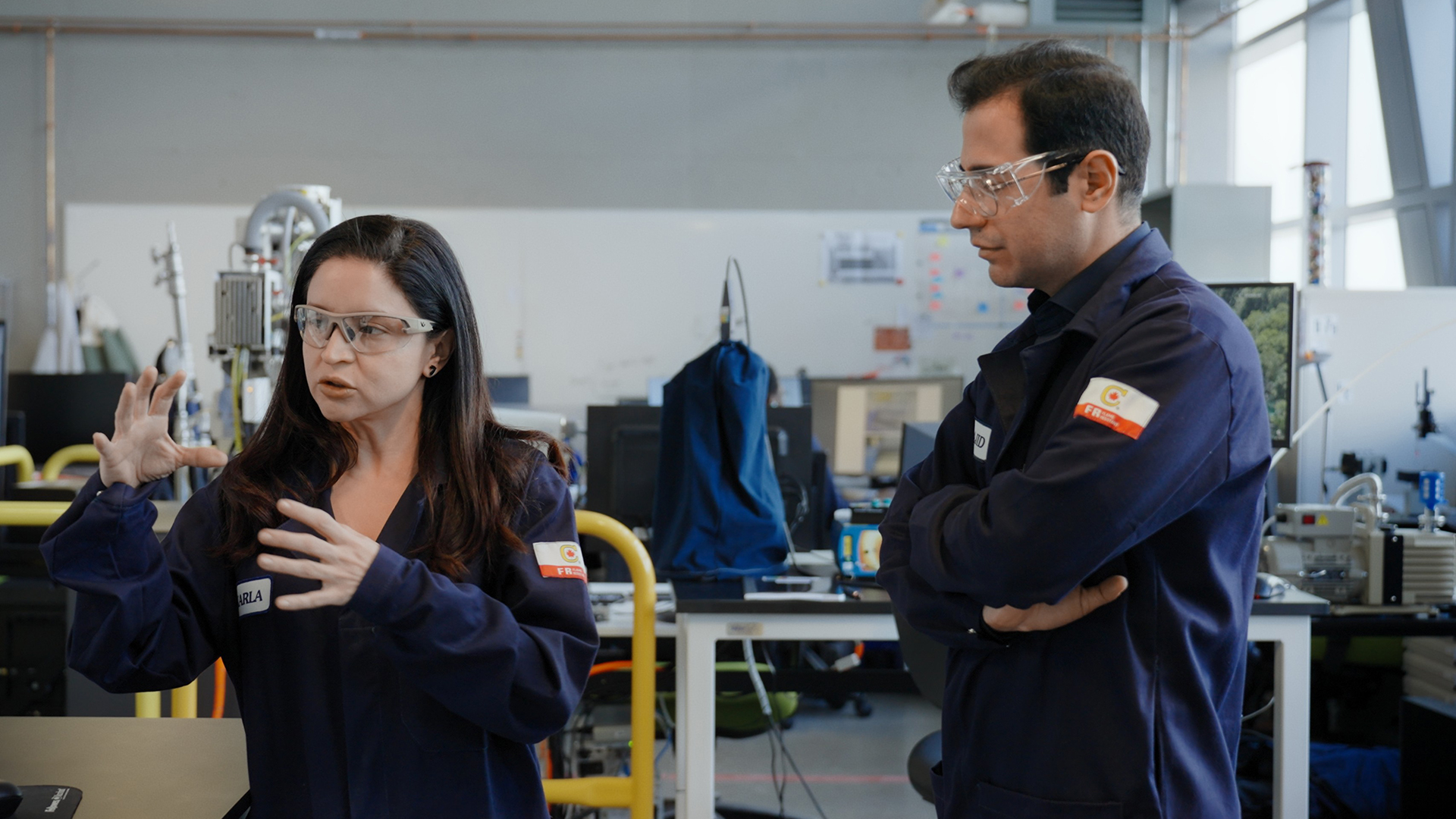
The Centre for Innovation and Research in Advanced Manufacturing and Materials (CIRAMM) at SAIT is enhancing applied research capacity in aerospace, defence, and manufacturing sectors.
At the Southern Alberta Institute of Technology (SAIT) in Calgary, Alberta, Canada, the Centre for Innovation and Research in Advanced Manufacturing and Materials (CIRAMM) is ready to take flight in a city known for its big blue sky. One of the centres in SAIT’s Applied Research and Innovation Services (ARIS) Hub, CIRAMM collaborates with industry partners to support innovative design, simulation, manufacturing and prototyping, materials and processing, material characterisation, and robotics and automation. This applied research team is fostering cutting-edge digital manufacturing technologies and developing novel materials solutions across strategic sectors, including aerospace, defence, construction, energy and manufacturing.
As rapidly evolving technologies coincided with a growing need for stronger applied research capacity in manufacturing and materials science, CIRAMM was established in 2020 under Dr Hamid Rajani’s leadership. With more than 15 years of experience in industry and academia, he leads a 20-member research team, delivering a robust portfolio of applied research to partners and funders. Dr Rajani has a background in mechanical engineering as well as materials science and engineering. As CIRAMM’s research chair, he champions applied research that integrates materials science, data science and advanced manufacturing. CIRAMM focuses on strong partnerships between industry and academia to address real-world challenges.
In 2023, CIRAMM began collaborating with local, regional and national partners and funders to advance its capacity to respond to Canada’s aviation, aerospace and defence innovation ecosystem. CIRAMM’s applied research portfolio responsiveness is industry agnostic, and the centre has emerged as an active member of Canada’s national security research community. Notably, it is one of 13 Canadian sites within the NATO DIANA network and home to the Alberta Aerospace Research Centre (AARC), the Aerospace Composite Materials Lab (ACML) and Advanced Construction Technologies (ACT).
The future of aerospace and defence
“Rapid technological change and growing uncertainty are reshaping how nations safeguard security and maintain sovereignty. As technologies evolve, these shifting conditions are placing new expectations on the aerospace and defence sector, raising the bar for performance and long‑term resilience. Research and innovation are essential to ensuring resilience and long-term capability,” says Dr Rajani.
According to the Government of Canada reporting, in 2024, the Canadian aerospace industry maintained its #1 R&D ranking among all Canadian manufacturing industries and was 2.8 times more R&D intensive compared to other manufacturing industries.

“Advances in manufacturing technologies, automation and materials science continue to transform the aerospace and defence landscape. Precision manufacturing and robotics are improving consistency, quality and efficiency across production processes, while new materials are enabling stronger and more resilient components tailored for increasingly complex applications.”
“At the same time, rigorous testing and validation are essential to ensure these technologies perform as intended in real-world conditions,” says Jamie McInnis, Director of ARIS. “Applied research plays an important role in this ecosystem, helping bridge the gap between development and operational use by reducing risk, verifying performance, and supporting the integration of new technologies into complex systems.”
Canada’s growing investment in security and sovereignty
Aerospace and defence are recognised as key contributors to Canada’s research and innovation landscape. In recent years, this area has received increased attention, with innovation identified as a core pillar of the national Defence Industrial Strategy. According to the Government of Canada, the aerospace and defence sectors contribute to economic growth, technological development and national security.
The aerospace and defence industry continues to experience unprecedented growth and remains a strategic and funding priority for Canada, as demonstrated by achieving 2% of gross domestic product defence spending target, marking a significant milestone in Canada’s approach to national defence and collective security.
With funding and strategic partnerships in place, CIRAMM is ready to meet the current momentum with the necessary research infrastructure to respond to the sector’s immediate need and its growth potential. “CIRAMM’s work with the Aerospace Composite Materials Lab is helping to position our centre as a key player in aerospace innovation,” says Dr Rajani. “We are engaging with major industry leaders, and we’re on track to achieve ISO certification, making us a certified aerospace testing centre. This is a game-changer for Alberta’s aerospace sector.”
NATO DIANA Test Site
As one of 180 NATO Defense Innovation Accelerator for the North Atlantic (DIANA) test centres, CIRAMM contributes to dual-use innovators aligned with NATO priorities, including access to global networks and opportunities to advance technology translation in the defence sector. Working within the NATO DIANA network, CIRAMM helps to provide matched partners with guidance to advance technologies to solve critical defence and security challenges. With the launch of the 2026 NATO DIANA programme, CIRAMM is engaged with the program’s largest cohort of innovators seeking to drive innovation while helping ensure that the Alliance remains at the forefront of global defence and security challenges.
Alberta Aerospace Research Centre (AARC)
Embedded within CIRAMM’s operations, the Alberta Aerospace Research Centre (AARC) is a platform for aerospace and defence engagement with a mandate to advance lightweight, high-performance materials for aeronautical applications. This includes aircraft, unmanned aerial systems (drones), advanced air mobility platforms, advanced alloys, ceramics and alloy-ceramic composites for astronautical applications, to meet extreme performance under thermal and mechanical stress. Through AARC, CIRAMM is focused on the discovery and development of advanced materials with unique properties, including ballistic and resistance, impact durability and electromagnetic and optical characteristics for stealth, detection or communication applications. In addition to materials innovation, CIRAMM seeks to leverage artificial intelligence (AI) to support dual-use defence technologies for smart vision and detection systems as well as predictive maintenance solutions for defence assets and infrastructure. For example, CIRAMM recently worked with aeroplane manufacturer De Havilland Canada to test composite materials under various operational conditions. As De Havilland Canada moves closer to opening its production hub and headquarters just east of SAIT’s campus, being near a fully operational applied research facility able to respond to its research and operational needs supports the foundation of a growing relationship with CIRAMM.
CIRAMM’s state-of-the-art research facility features five specialised laboratories focused on advanced digital manufacturing and aerospace and defence materials. Supported by municipal, provincial and federal funders, each facility is equipped with leading-edge technology:
Advanced Materials Characterisation (AMC) Lab: Delivers advanced materials testing tailored to high-performance defence and aerospace applications. The lab is currently finalising ISO 17025 certification, a globally recognised accreditation. This designation will facilitate cooperation regionally, nationally, and internationally by providing test outcomes recognised globally. The AMC Lab can evaluate a wide range of mechanical properties under harsh environments and is complemented by unique 2D, 3D, and 4D microscopy techniques for materials development. It accommodates comprehensive physical and chemical property testing of aerospace and defence materials.
Novel Materials Laboratory: Provides unique capabilities to synthesise advanced defence materials, with a focus on high-performance alloys, engineering ceramics, metal matrix composites, cermets, and aerospace-grade fibre-reinforced composites. Key equipment in this lab includes a vacuum arc furnace, spark plasma sintering (SPS) furnace, aerospace-grade autoclave, physical vapour deposition (PVD) chamber and powder atomiser.
Advanced Manufacturing Lab: Provides robot-assisted laser welding and cladding capabilities to enhance joint and surface properties of materials for defence applications. The lab also houses full five-axis machining capacity for producing complex prototypes.
Intelligent Design and Additive Manufacturing Lab: Employs artificial intelligence (AI) driven design techniques to develop lightweight metamaterials with tailored physical and mechanical properties. This lab integrates computational modelling, including computational fluid dynamics (CFD) and finite element analysis (FEA), with additive manufacturing systems capable of printing a wide range of materials, from engineering polymers and composites to metals using selective laser melting (SLM) and directed energy deposition (DED). These capabilities enable the production of components at multiple scales.
Robotics and Automation Lab: Focuses on providing digital integration across CIRAMM’s facilities, commissioned in collaboration with ABB. Robotics and AI are embedded in operations across all labs to increase productivity, repeatability, and precision.
These five labs are an integrated ecosystem where design, prototyping, synthesis and testing can be performed iteratively, creating a closed-loop approach that accelerates innovation.
Aerospace Composite Materials
Uniting CIRAMM’s AMC and Novel Materials Labs, the Aerospace Composite Materials Lab (ACML) reflects research infrastructure for advanced composite materials with a specific focus on ceramic-metal composites (Cermets), metal-matrix composites (MMCs), and large complex-geometry fibre-reinforced composites, to help respond to materials and manufacturing needs of the aerospace industry. Through its innovative research activities, the ACML provides training for early-career researchers while supporting dual-use innovators, such as members of the 2026 NATO DIANA cohort, and aerospace companies that develop and test new high-performance components using advanced composite materials. Specifically, modern defence solutions increasingly rely on advanced materials that can respond to temperature extremes, stress, radiation, and electromagnetic exposure that intersect with the design and manufacturing of high and low temperature systems, lightweight armour, stealth coatings, and energy-dense storage systems.

Integrating artificial intelligence (AI)
In addition to its research focus on aerospace and defence, CIRAMM is actively focused on integrating AI adoption into manufacturing and materials and advancing alternative construction technologies. “AI is emerging as a valuable complement to existing research and development practices, particularly in complex, data-rich environments. Rather than replacing established methods, AI is increasingly being explored as a tool that can analyse data efficiently, identify patterns, support decision making and provide additional insight where appropriate,” said McInnis.
AI is increasingly viewed as a key step in staying ahead of the curve, and by leveraging AI for predictive algorithms and novel material design, CIRAMM is developing solutions that help optimise manufacturing processes to accelerate the creation of advanced materials. CIRAMM projects include AI-driven modelling for materials performance, design and development of metamaterials, machine learning algorithms to predict manufacturing system behaviours, and the integration of AI and robotics to streamline production. This holistic approach addresses critical industry gaps and aligns with global sustainability goals, fostering adaptive manufacturing ecosystems.
Collaboration leading to innovation
McInnis explains, “a key challenge lies in moving innovation from concept to practical application. While new tools, materials, and processes continue to emerge, access to testing environments, validation support, and real‑world demonstration opportunities can be limited. Addressing this requires research and industry collaboration, combining technical expertise with infrastructure to support the move of innovations beyond early-stage development and into broader use.”
CIRAMM’s Alternative Construction Technologies (ACT) has a mandate to integrate the manufacturing and construction industries through advanced manufacturing, automation/robotics and materials science. The ACT Hub helps to advance collaborative activities between academic and industrial experts to strengthen and fill gaps across Western Canada’s construction innovation ecosystem.

“Addressing the challenges shaping aerospace, defence, and construction innovation cannot be done by one. Progress depends on the ability to move ideas beyond early development, validating them under practical conditions and preparing them for broader application,” McInnis said. “Collaborating with other institutions to gain insight from their expertise is key to success. By connecting industry, research partners, academia and organisations across regions and borders, we all create shared learning and meaningful advancement. Through collaboration, innovation can move faster and with greater confidence, strengthening capability today while building a foundation for the systems and technologies of the future.”
CIRAMM offers applied research services, including but not limited to:
Mechanical, physical, and chemical testing of materials
Advanced microscopy and imaging
Synthesis and processing of novel alloys, ceramics, composites, and polymers
Design, computer simulation, and reverse engineering
AI-enhanced robotics and automation
AI-driven machine vision
Additive manufacturing
CNC and robotic machining
Robot-assisted welding and cladding
Please Note: This is a Commercial Profile
Please note, this article will also appear in the 26th edition of our quarterly publication.
Source link

