Separating, concentrating and reducing PFAS destruction costs
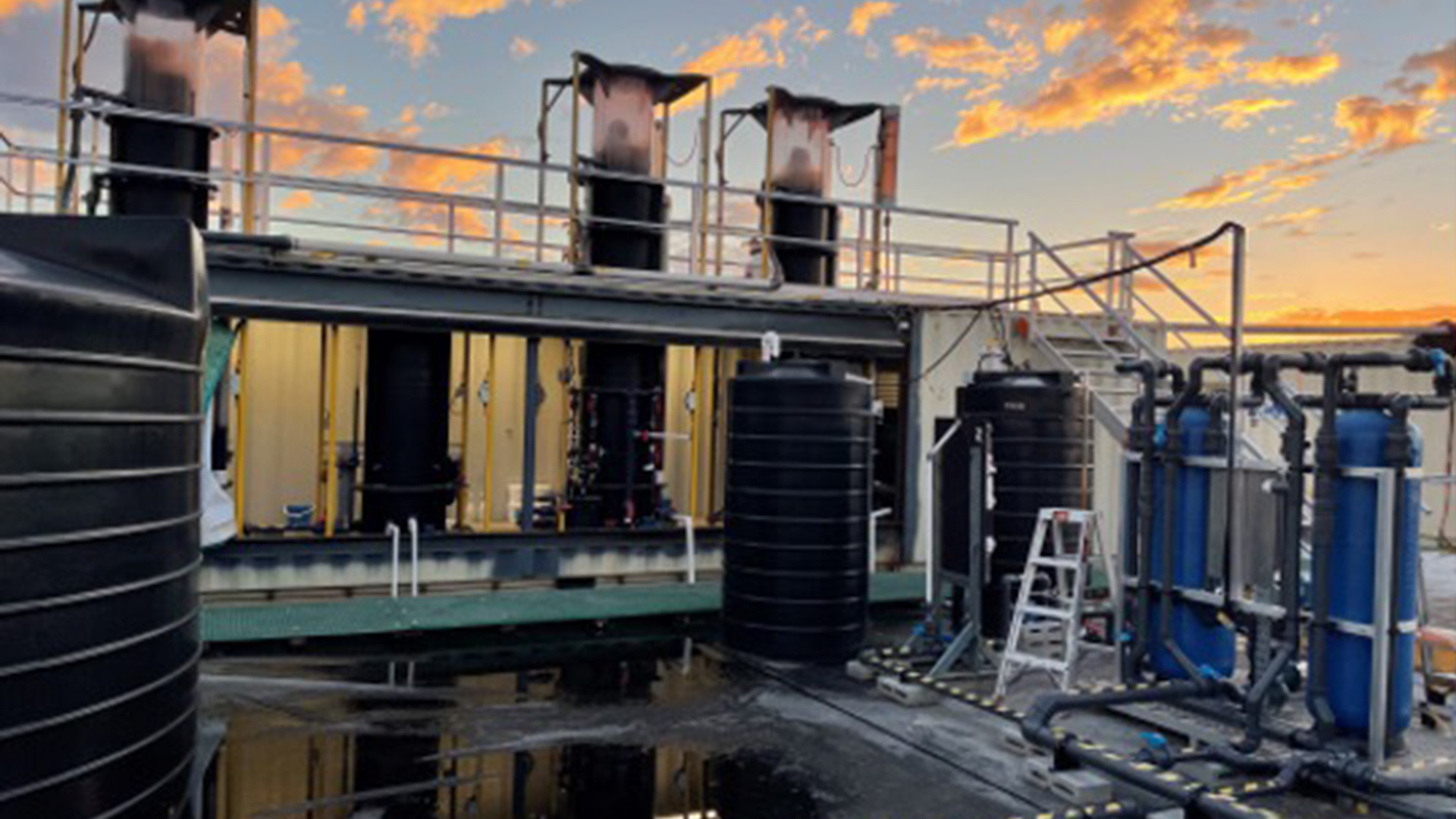
EVOCRA’s evolution of foam fractionation is improving the economics of permanent PFAS elimination
Per‑ and polyfluoroalkyl substances (PFAS) are now recognised as one of the most persistent and challenging contaminant classes in modern industrial and municipal water management. Around the world, asset owners and regulators are searching for treatment approaches that meet tightening discharge limits, while reducing waste management costs via volume reduction and shrinking the lifecycle costs of PFAS destruction, enabling the elimination of PFAS. Against this backdrop, Australia’s EVOCRA has developed and proven its patented Ozofractionation process that removes and concentrates PFAS into a small, predictable waste stream while treating complex co‑contaminants in a single, modular system.
The evolution of Ozofractionation
EVOCRA is an Australian environmental technology company specialising in advanced water treatment for industrial, mining, and contaminated water applications. Since 2011, the company has focused on redeveloping foam fractionation into a broader, multi‑mechanism water treatment technology formalised in its patented Ozofractionative Catalysed Reagent Addition (OCRA®) process, commonly referred to as Ozofractionation. More recently, EVOCRA has been working to adapt Ozofractionation for application of removing PFAS from the influent of municipal wastewater.
The first Ozofractionation pilot plant was deployed on a Tasmanian gold mine, demonstrating that the process could manage highly variable, co‑contaminated wastewater under real‑world conditions. By 2017, OCRA had progressed from concept to large‑scale PFAS remediation at Brisbane International Airport, where EVOCRA’s system treated multiple PFAS‑impacted sources, some with concentrations above 20 mg/L and reduced roughly 20 million litres of contaminated water to less than 100,000 litres of foamate, which at that time required off‑site destruction.

Since then, EVOCRA has deployed Ozofractionation for PFAS‑impacted surface waters at fire training grounds, landfill leachate, and as a final PFAS polishing step at major liquid waste facilities, as well as in mining and industrial wastewater projects. The company is accredited for ISO 9001, 14001, and 45001 certifications and collaborates internationally through licensing agreements in North America (with E2METRIX, an OVIVO company) and a collaborative licensing agreement with Arcadis primarily in Europe and South America.
The mechanism of Ozofractionation
At its core, foam fractionation is a physical separation process that utilises the injection of gas into a column of contaminated water – as the bubbles rise through the water, they collect surface‑active contaminants into a foam layer that is collected at the top of the column. EVOCRA’s innovation was to deliberately enhance this mechanism with ozone, creating a multi‑faceted process that couples advanced flotation with chemical oxidation, precipitation, and chemical activation in a single vessel.
In an Ozofractionation column, a fine stream of air‑ozone or oxygen‑ozone gas is introduced into the PFAS‑impacted water, forming micro‑bubbles with high surface area and increased electrostatic charge. Hydrophobic and amphiphilic contaminants, including PFAS, preferentially adsorb to the gas‑water interface of these bubbles, which then rise and form a stable foam at the top of the column. As the foam accumulates, it is captured in an engineered collection head, collapses and drains as a concentrated liquid ‘foamate’ stream, while the bulk of the water is left substantially cleaner.
Because ozone is present inside the bubbles and dissolved in the liquid, it simultaneously:
Increases the oxidation–reduction potential (ORP) of the water, enhancing the reactivity of reagents and downstream media.
Oxidises many organic contaminants and pathogens, reducing toxicity and biological load.
Promotes the formation of insoluble inorganic oxides that can either adhere to bubbles or settle as precipitates.
The combination of stable micro‑bubbles, high ORP, and multiple removal pathways is what differentiates Ozofractionation from air‑only foam fractionation systems and more conventional single‑mechanism PFAS treatment trains. This also provides opportunities for removing PFAS and other persistent compounds from very complex co-contaminated water sources.
Foam fractionation exploits a PFAS strength
PFAS molecules are amphiphilic, having a hydrophilic functional group ‘head’ and a hydrophobic fluorocarbon ‘tail’. This structure and its resulting properties is what drove their widespread use, and it also drives them to accumulate at gas–water interfaces, orienting with their hydrophilic head towards the water phase and their hydrophobic tail towards the gas phase. In a foam fractionation column, this behaviour makes PFAS natural passengers on the surface of bubbles.
Long‑chain PFAS, with extended hydrophobic tails, are especially amenable to removal by foam fractionation and can typically be reduced to meet stringent regulatory limits or below detection. Short‑chain PFAS are intrinsically more challenging because of their higher solubility and weaker surface activity, but ozone‑enhanced micro‑bubbles and optimised column hydrodynamics improve their capture relative to air‑only systems. EVOCRA’s data shows >99% removal of long‑chain PFAS and up to 75% removal of short‑chain species, with typical treated water quality of PFOS <2.5 ng/L and PFHxS and PFOA below 50 ng/L without polishing. When Ion Exchange (IX) polishing is included, ∑PFAS₂₈ <0.1 µg/L is achievable.
Laboratory and field work, including independent studies cited by EVOCRA, indicate that ozone foam fractionation can produce 75% less PFAS‑containing waste than air foam fractionation alone. This is due to bubble size and the relative volume of water carried in the bubble wall. This makes the removal efficiencies of Ozofractionation more impressive than other foam fractionation systems. Reducing waste volume is central to the technology’s economic and environmental value.
Ozofractionation reduces the lifecycle costs
Ozofractionation can be installed as a standalone system for reducing volumes requiring further management. However, Ozofractionation is a powerful front‑end treatment and concentrating technology, that can be paired with specialised polishing systems further improving treated water quality or destruction processes to eliminate the concentrated contaminants captured in the foamate. In practice, Ozofractionation is best understood as a compact, engineered process that:
Reduces co‑contaminated pretreatment costs of complex wastewaters, with no pretreatment required for organic or metal co‑contaminates.
Reduces the mass load of contaminants in the treated water, improving downstream polishing performance and economics.
Dramatically reduces the volume of PFAS liquid requiring destruction.
Reduces PFAS destruction costs, by size reduction and performance increases, providing improved environmental benefits.
For applications requiring ultra‑low PFAS levels in environments where regulatory standards continue to tighten, Ozofractionation is typically integrated with polishing IX or GAC beds and a suitable destruction process such as electro‑oxidation, or most other destruction technologies. This ensures that the ‘forever’ aspect of PFAS is addressed by breaking the molecules down, while Ozofractionation provides the concentrated, manageable feedstock that makes such destruction practical.
Performance and waste minimisation
Across multiple projects, EVOCRA’s waste generation from its Ozofractionation systems range from 0.05% to 0.1% of the influent volume, meaning that more than 99.9% of treated water can be recovered as clean effluent. In PFAS‑specific applications, primary fractionation columns typically produce foamate volumes below 5% of the raw water volume, falling below 1% after secondary fractionation of the concentrate, with ozone‑enhanced systems achieving waste yields as low as 0.1% of the influent volume.
Independent and partner data reinforce these outcomes. E2METRIX’s Olift™ system, which implements EVOCRA’s technology in North America under licence, has demonstrated up to 99% removal of targeted PFAS from leachate streams, with foamate volumes between 1% and 10% of the treated influent. In drinking water reverse osmosis concentrate studies, ozone‑assisted Olift foam fractionation achieved over 90% removal for six regulated PFAS compounds, an 84% total PFAS reduction, and produced a foamate volume 75% smaller than an air‑only foam fractionation configuration.
For asset owners, these performance characteristics translate directly into cost savings from reduced waste transport, disposal, and liability issues. Traditional water treatment processes produce significant volumes of PFAS‑impacted GAC or IX media. These solid wastes require offsite high‑temperature incineration or disposal at secure landfill facilities.
Enabling efficient PFAS destruction
One of the strongest arguments for Ozofractionation is the way it reshapes the economics and feasibility of PFAS destruction technologies. Electro‑oxidation, SCWO and HALT can achieve substantial PFAS destruction, but all are highly sensitive to the volume, conductivity, and composition of the feed stream.
By concentrating PFAS into a small, high‑conductivity foamate fraction, Ozofractionation allows destruction systems to be scaled and operated around a fraction of the hydraulic capacity that would be required for the original wastewater, reducing both capital footprint and energy demand per unit of PFAS destroyed. In a recent application by E2METRIX of the Obreak™ electro‑oxidation process, integrated with Olift, the reduced foamate volumes, improved destruction performance and enabled over 80% total PFAS destruction for less than 0.26 kWh per Litre of foamate – a significant improvement over air‑only foam fractionation.
EVOCRA’s own cost and performance analyses indicate that Ozofractionation‑concentrated PFAS streams can reduce destruction costs by 20–80%, depending on the destruction technology and site‑specific conditions, when compared to treating dilute streams or managing spent GAC/IX waste. This enables asset owners to move beyond ‘capture and store’ and towards genuine PFAS elimination.
Capital recovery in less than one year
While performance is critical, decision‑makers in utilities and industry are equally concerned with lifecycle cost. EVOCRA recently compared the cost of an Ozone Foam Fractionation PFAS water treatment plant with that of a conventional IX PFAS plant for a 500,000 L/day duty treating identical influent to the same discharge criteria. The source water was a surface water with relatively low PFAS impact, but did contain other organic and metal co-contaminants.
The resulting IX plant design incorporates equalisation, dissolved air floatation (DAF), moving bed biofilm reactors (MBBR), clarification, sand filtration, GAC, and PFAS‑selective IX media. The equivalent Ozofractionation based system included a three-column foam fractionation stage, a smaller IX polishing stage, a single column foam concentrating stage and an integrated destruction system. The Ozofractionation did have a 35% higher build cost, translating into a higher monthly plant lease charge, however the Ozofractionation plant’s operating costs were 75% less than the equivalent IX system. This saving is provided by reductions in annual expenses, energy, waste, and consumables. Labour, maintenance, and routine monitoring of plant performance were assumed to be similar across both plants. The difference is driven primarily by:
PFAS waste management costs of 22% higher per year for IX versus Ozofractionation.
Consumables (media and reagents) of >70% higher per year for IX versus Ozofractionation, which relies on on‑site ozone generation and reduced media dependence.
On this basis, the Ozofractionation system’s additional capital is recovered in less than one year through annual operating savings, with cumulative savings of about A$2m over three years and over A$10m after 12 years.
These figures are site‑specific, and assumptions such as power prices, waste costs, discharge levels and monitoring regimes influence the adaptation of these values to other deployments. Notably, as the water quality deteriorates, the costs of IX and associated pretreatments increase, often dramatically. These figures demonstrate that waste minimisation and consumables avoidance can more than offset modest capital premiums when treatment plants are evaluated on a whole‑of‑life basis.
Applications across sectors
Because Ozofractionation acts on surface‑active contaminants and leverages oxidation and precipitation, it has been applied across a wide range of sectors where PFAS rarely occurs alone. EVOCRA’s project successes include:
Airport stormwater and fire‑training runoff contaminated with legacy AFFF, including major deployments at Brisbane and Hobart airports.
Landfill leachate, where PFAS co‑exists with organics, metals, and ammonia, and where minimising waste volume and transport risk was particularly important.
Liquid waste facilities, providing PFAS polishing to ensure discharge remains compliant under tightening standards.
Mining and industrial wastewater, including acid mine drainage, LNG cooling water, industrial laundries and food‑processing effluents, with PFAS removal layered onto a broader contaminant‑removal objective.
Pilot and commercial plants range from 1,000 L/day units for short‑term validation and client assessment through to long-term modular mobile systems treating megalitres per day. Systems can be fully mobile, semi-permanent or fixed, standalone or integrated into existing infrastructure, and are automated to suit local operating environments and skillsets.
A global ecosystem: Ozofractionation, Olift™ and Obreak™
EVOCRA’s technology is increasingly embedded in a global PFAS treatment ecosystem. In North America, OVIVO’s E2METRIX business deploys Olift foam fractionation columns (based on Ozofractionation) together with its Obreak electro‑oxidation system as an integrated removal and destruction platform for municipal and industrial clients. E2METRIX’s combination of Olift–Obreak systems into domestic drinking water and industrial show that high PFAS removal and substantial destruction can achieve at competitive energy consumption, with foamate volumes far lower than would be produced by air foam fractionation.
In Europe and South America, EVOCRA’s collaboration with Arcadis leverages the consulting firm’s reach and remediation experience to identify suitable applications and integrate Ozofractionation into larger PFAS management frameworks. These partnerships provide continuous technical feedback, support ongoing R&D, and help ensure that the technology remains aligned with regulatory expectations and real‑world site constraints.
Looking ahead: A pragmatic tool for a long‑term problem
PFAS contamination will remain a long‑term challenge for regulators, asset owners and communities, particularly as standards tighten and as the characterisation of legacy sources improves. No single technology addresses every aspect of the problem, but the combination of robust removal, waste minimisation and destruction‑readiness offered by Ozofractionation positions it as a pragmatic, scalable tool in a wider treatment toolbox.
For operators, its main benefits include:
The ability to treat complex, co‑contaminated waters without separate pretreatment units, reducing plant complexity and additional waste streams.
Significant PFAS volume reduction, which improves the economics and environmental footprint of downstream destruction.
Demonstrated whole‑of‑life cost advantages over conventional PFAS treatment trains, driven by lower waste and consumables.
Flexibility in deployment, from short‑term pilots to permanent facilities integrated with existing infrastructure.
For the wider PFAS innovation community, EVOCRA’s trajectory illustrates how re‑engineering established principles like foam fractionation, combined with thoughtful partnerships and independent validation, can move the sector beyond incremental improvements towards integrated, destruction‑enabled solutions.
Please Note: This is a Commercial Profile
This article will feature in our upcoming July PFAS Special Focus Publication.
Source link

